

Blog
Choosing The Right Fishing Line- A Definitive Guide!

Choosing the right line for your style of fishing is essential. With so many different types now available, it would be easy to get it wrong and potentially make a costly mistake. Jansen Teakle is on hand to offer some sound advice when it comes to loading up your reel, tying rigs and selecting the right type, breaking strain and diameter for your sea fishing.
Fishing line can be broken down in to different groups from the get-go, making it easier for you to short list the right line for the job.
Main lines
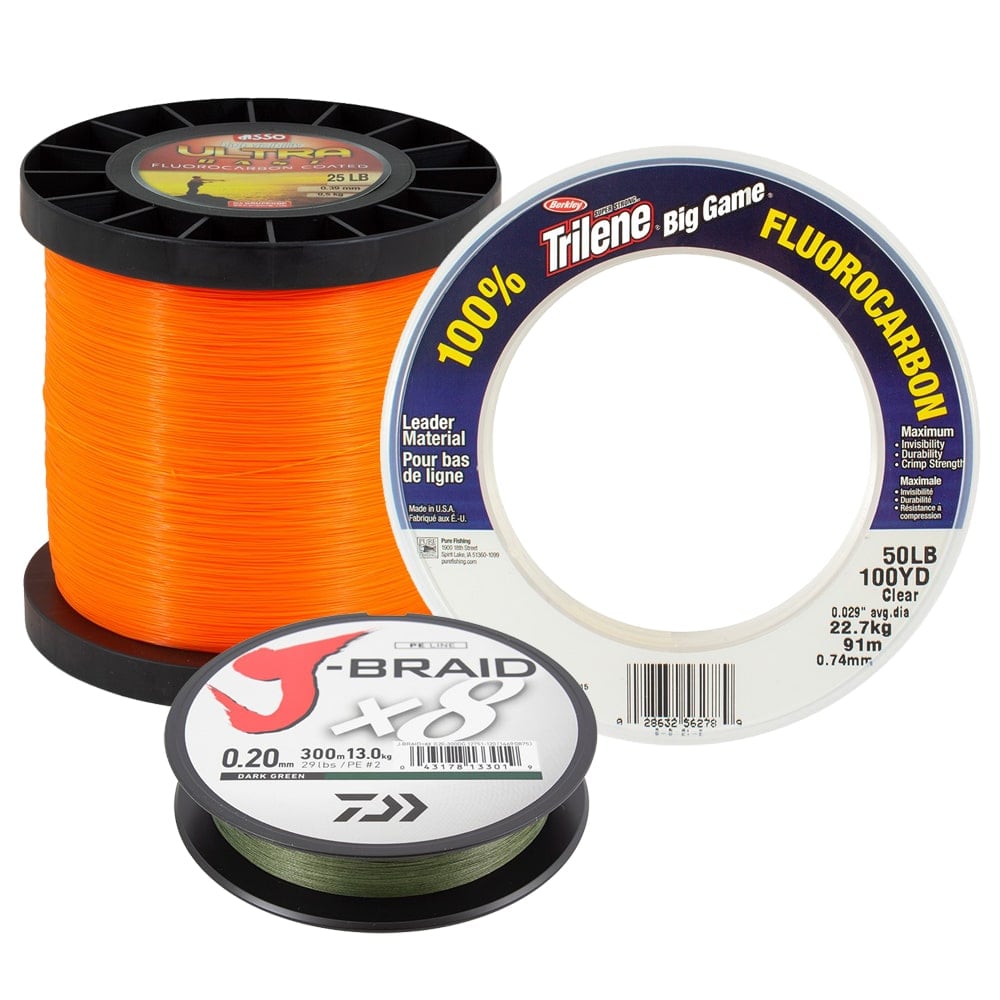
Main line is a term used to refer to the line that will be loaded on to your fishing reel. Main lines are generally monofilament, mono for short, but over the last decade or so braid mainlines have found favour with fixed spool reel users.
Monofilament
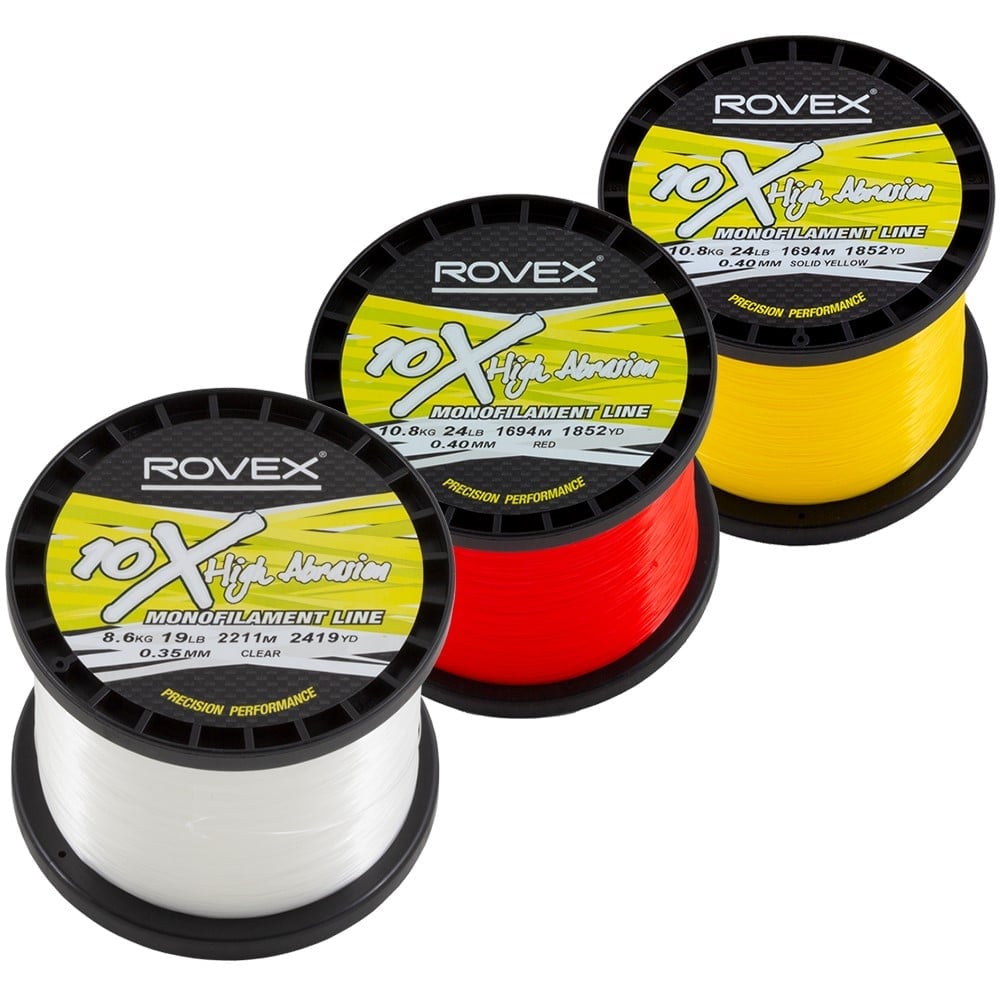
Mono is available in a huge variety of colours. High visibility main lines are a great choice for fishing in the dark as they stand out well under torch light making it easier to spot bites. Black or dark lines will show up better during bright sunlight.

Mono mainline’s offer trouble free fishing, are good value for money and graded by diameter and breaking strain. Testing the breaking strain of a line is far harder than measuring its diameter, and it is the diameter that will be of most importance to your fishing in practical terms.
As a general rule of thumb, the following guidelines on main lines can be applied-
Fixed spools for shore fishing (mono)-
Clean ground 0.25-0.32mm
Mixed ground 0.35-0.37mm
Rough ground 0.37-0.40mm
Multipliers for shore fishing (mono)-
Clean ground 0.32-0.35mm
Mixed ground 0.37-0.40mm
Rough ground 0.40mm-0.45mm
It’s important to understand why these guidelines are being used, so here’s a breakdown on the thinking.
The thicker the line, the quicker the line level on your reel will drop on the cast. On a fixed spool reel, thick line will drop fast and create friction as it drops, losing you casting distance.
On a multiplier reel, the line level will also drop faster, meaning that there is increased resistance when delivering line to the end tackle, again leading to a reduction in casting distance.
Lower diameter lines will do the opposite. A low diameter line leaving a fixed spool reel on the cast will mean that the line level drops slower, reducing friction and leading to longer casts.
Lower diameter lines on multiplier reels will also mean that the line level drops slower, ensuring smooth delivery to the lead as it accelerates away. Thinner lines are more vulnerable over snaggy sea beds and thicker lines offer more abrasion resistance, so it’s a case of finding the balance.
Thin lines cast far, but are delicate, thick lines reduce the cast but are stronger.
Mono is rarely used for boat fishing or lure fishing, braid is considered more effective for deep water fishing or jigging (see below). The uptide method of boat fishing is still practiced with mono, its stretch allows for better cushioning of the tackle in strong tides.
Braid
Braid is more expensive than monofilament, but will last a lot longer. Using Braid over clean to mixed sea beds could see that braid last a couple of years or more, whilst monofilament would have to be changed far more frequently.
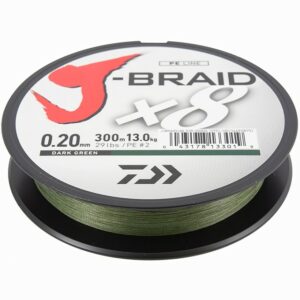
Although some anglers use braid for casting with multiplier reels, its low diameter and lack of stretch mean that unless you’re a seasoned angler and competent caster, it could prove more trouble than it’s worth. Braid can bed in on itself and result in some horrific overruns.
Braid is finer and more supple than mono.
Braid can be used on fixed spool reels with relative ease, again by following a few basic guidelines. Buying braid by breaking strain is fine, as all braids are of a far lower diameter than mono’s and owing to their soft nature, can prove troublesome to measure by diameter. Switching to braid on a fixed spool reel will see an immediate increase in casting distance (remember, reduce the diameter, increase the casting distance) but there are other factors to take in to consideration. Braid has zero stretch meaning that bite detection is excellent, but it is known for smaller species of fish to be notoriously difficult to hook when using it. It’s thought that owing to the lack of stretch, smaller species sense some resistance and shy away. This is not such a problem for larger species in deep water. Braid is excellent for any boat fishing situation as its reduced diameter and lack of stretch ensures direct contact with the end tackle. The braid will cut through the tide with greater ease meaning that lighter leads can be used than would be possible with thicker monofilament lines that would catch in the tide.
As braid is very low in diameter, some anglers will fish a heavy braid (40-60lb) straight through without a shock leader (see below for shock leader), but this again can present problems. A high breaking strain braid that becomes snagged without the weak spot of a shock leader knot can really take some breaking and could potentially snap anywhere. Lost braid can create a bad line snag that will last a long time, and if it is wrapped around a couple of boulders, it could be 100lb, but it won’t budge. Use braid sensibly with a mono shock leader and you shouldn’t have any issues. We would recommend a braid of around 30lb breaking strain with a shock leader for general shore fishing work. Because braid doesn’t stretch, when applied straight to the spool of your reel it will tighten down to the point where the whole load will turn on the spool, giving the impression that the reels drag is loose. It’s important to add a short (30 meters or so) length of monofilament to the spool first as this will cushion the braid that is in place above.
If your tackle becomes snagged, be cautious when pulling for a break with heavy braid as it can place excessive strain on your reel. A short section of broom handle wrapped around the braid is a better option than using the reel to take the full brunt of this force.
Always use some form of finger protection when casting with braid and ensure the clutch of your reel is fully locked down. Failure to do so could see the braid slip and give you a nasty cut to the finger!
Shock Leader
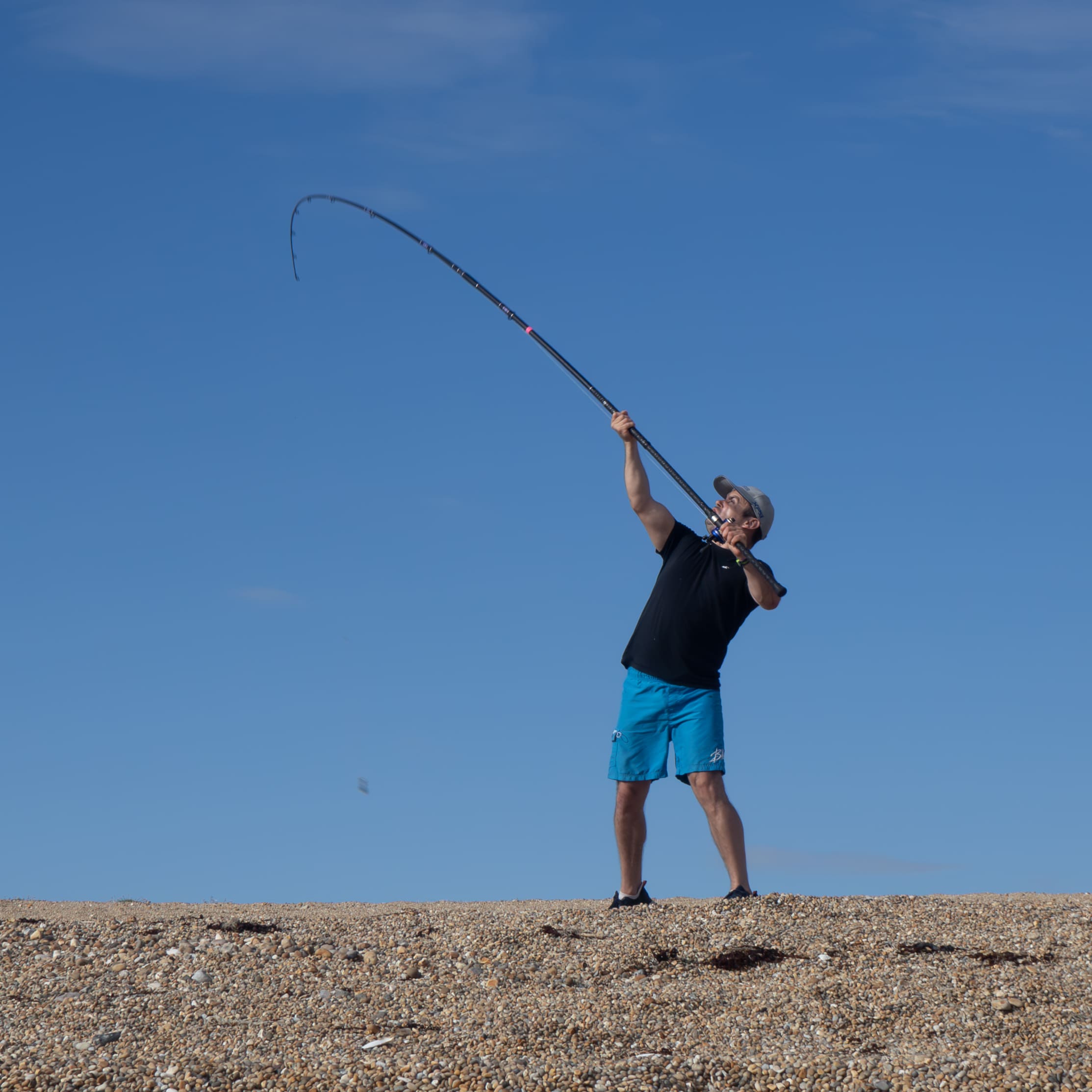
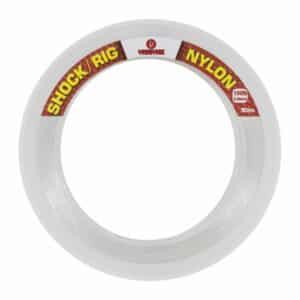
A shock leader is a heavier length of line that is tied to the end of the main line to take the force of the cast. It should run the length of the rod, plus half a dozen turns of the spool.
The breaking strain of the shock leader should be relevant to the weight of the lead being cast and the typical rule is to use at least 10lb of shock leader for every ounce of lead to be cast.
For example, casting with a 6oz lead will require a shock leader of 60lb breaking strain.
Casting with a 4oz lead will require a 40lb shock leader and so on. Tapered shock leaders are popular with fixed spool reel users. They allow for a much smaller knot meaning that as line leaves the reel on the cast, it is less likely to catch the leader knot and cause a crack off. The smaller knot is also far less likely to catch weed and get stuck in the tip ring of your rod.
Whether you are casting a fixed spool or multiplier reel, a shock leader is crucial. Trying to cast several ounces of lead on a regular mainline will likely result in it snapping, potentially sending the lead flying at dangerous speed across what might be a busy beach. ALWAYS use a shock leader.
Rig and Trace Lines
Rig and trace lines are often constructed from specific materials that ensure they are extra resilient, supple and easy to knot. Rig bodies in particular take a lot of stick, getting dragged around the sea bed, across reefs, rocks and other unseen obstructions. Even fine sand can have an abrasive effect on rig bodies, so it’s important to use something that’s up to the task.
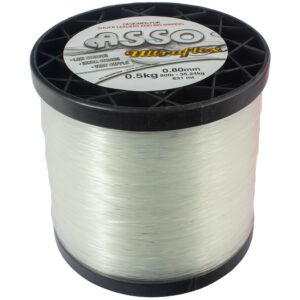
Rig bodies can be made using shock leader and for the majority of sea angling rigs, 80lb, or 0.80mm shock leader materials make good rig bodies. In the case of the pulley rig, some anglers will use 100lb, merely as a guard against the potential for the rigs main swivel pulling through the rig body on the cast. If you’re targeting species such as tope, the rig body could be stepped up further still, with breaking strains of 150lb, or 1.2mm diameter, now widely in use to combat the rough skin of such fish.
Snood Lines
Snood lines such as Amnesia are supple and have low memory. Low memory lines are easily stretched out to remove kinks.

This is important when species such as eels and pouting tangle rigs up as it means that the snood can be straightened out so the rig can be used again.
Straight, supple snood lines will present baits far more effectively than curly tangled ones.
Fluorocarbon
Fluorocarbon fishing lines are almost invisible underwater, this makes them effective for finicky species in clear water that might shy away from bright lines.
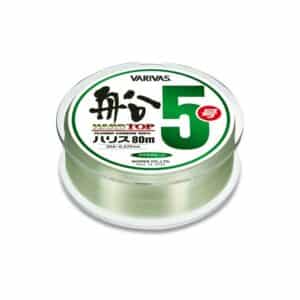
They are often harder and more resilient to abrasion. They are a popular choice for lure fishing as a trace line ahead of the lure tied to a braid mainline.
Wire
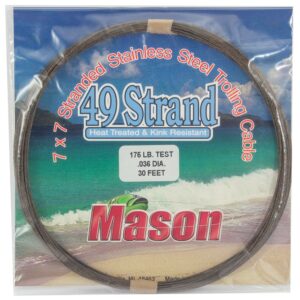
For species such as tope, spur dogs and conger eels, a wire trace is essential to combat sharp teeth. Heavy monofilament can be used, but wire is largely considered more effective. Wire can not be tied and crimps are used in place of knots to form connections.