

Blog
Shock leader – Is It Needed And What Should I Use?

If you haven’t been fishing for very long, you might not be familiar with a shock leader yet. But if you plan to be casting from the shore with lead weights, a shock leader really is something that you should get familiar with. But what should you be using, how much of it will you need and how often should you be changing it? Jansen Teakle has all the answers in today’s blog post.
Above all else, a shock leader is used as a safety measure and this is why it’s so important to get it right. Use a shock leader incorrectly, and you may as well not use one at all.
What actually is a shock leader?
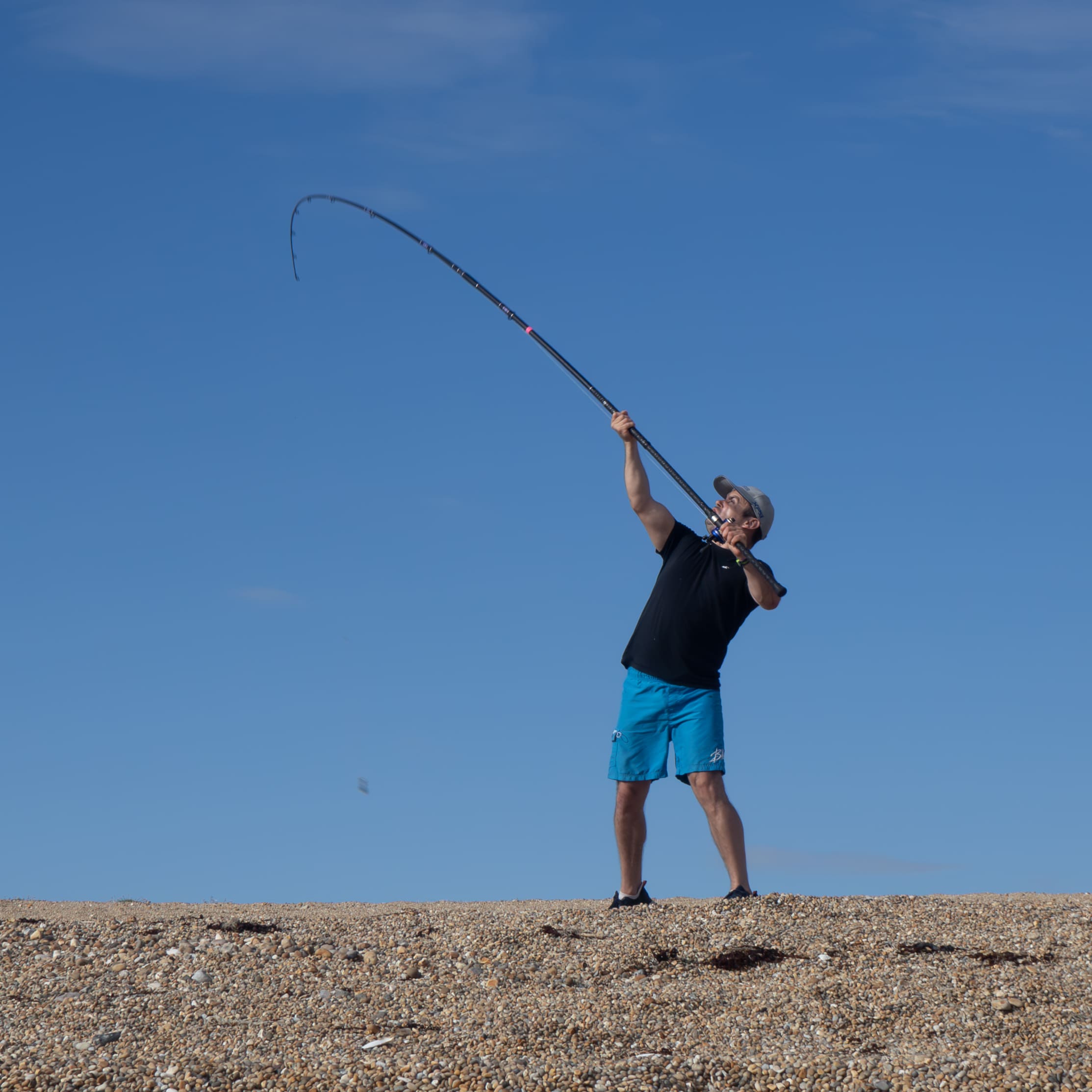
A shock leader is a length of heavy line that is tied to the end of your mainline and will take the shock of the cast. When you cast with a regular lead weight, for example let’s say 5oz, a lot of strain would be placed on the mainline. It would cause it to snap, sending the lead weight, your rig and bait sailing either down the beach or out to sea, depending on your cast. Believe me, getting hit with a lead really takes the wind out of your sails, and I speak from experience having been hit in the back on one occasion.
But hit someone in the head, and it’s game over. If anyone tells you not to use a shock leader, please ignore them. We have a responsibility to use our shore fishing tackle in a way that will not endanger our fellow anglers, as well as members of the public.
Seriously- please DO use a shock leader.

What should I use?
There are dozens of brands of specific shock leaders out there, but in truth, any line of a breaking strain high enough to absorb the force of the cast can be used.
There is a very basic rule that has been banded around since the dawn of time and I can’t recall who created it, but it’s as relevant now as it always has been- Use 10lb of breaking strain for every ounce of lead cast. For example, use 5oz of lead, use a 50lb shock leader.
Use 7oz, use a 70lb shock leader. As I say, this formula has been around for decades, and is still relevant, but as line manufacturing processes have improved, so have the lines that we can use. An 80lb shock leader is generally around 0.75-0.80mm in diameter, so is actually the same thickness as a 60lb line might have been twenty years ago. This means that you can use an 80lb shock leader, it remains supple and easy to tie and adds even more safety to your set up.
With some anglers now casting 8oz or even 10oz leads off the shore, 100lb leaders will occasionally need to be used, but this kind of kit is an exception and for the most part, 80lb will be more than adequate for leads weights up to 8oz. All of the above refers to parallel shock leaders, basically a heavy line that is consistently thick, but you can also buy tapered shock leaders.
These are thin at one end and thick at the other, meaning that it’s possible to tie a very small knot. These leaders are favoured by fixed spool anglers, as the small knot means that line leaving the spool on the cast can not foul on the knot, leading to a potential crack off. The smaller knot of a tapered shock leader will also pick up less weed and other debris, preventing jamming in the tip ring of your rod on the retrieve.
How should I use a shock leader?
The basics are that your shock leader needs to be long enough to wrap 6-10 times around the spool of your reel, run the length of your rod and then the length of your casting drop. If you’re going to be fishing a long way above the water, from rocks or a pier for example, a longer shock leader can be useful to assist with hand-lining fish up the side when a regular mainline could cut in to your hands. There is also less chance of a thrashing fish putting extra pressure on the knot itself, potentially snapping it.
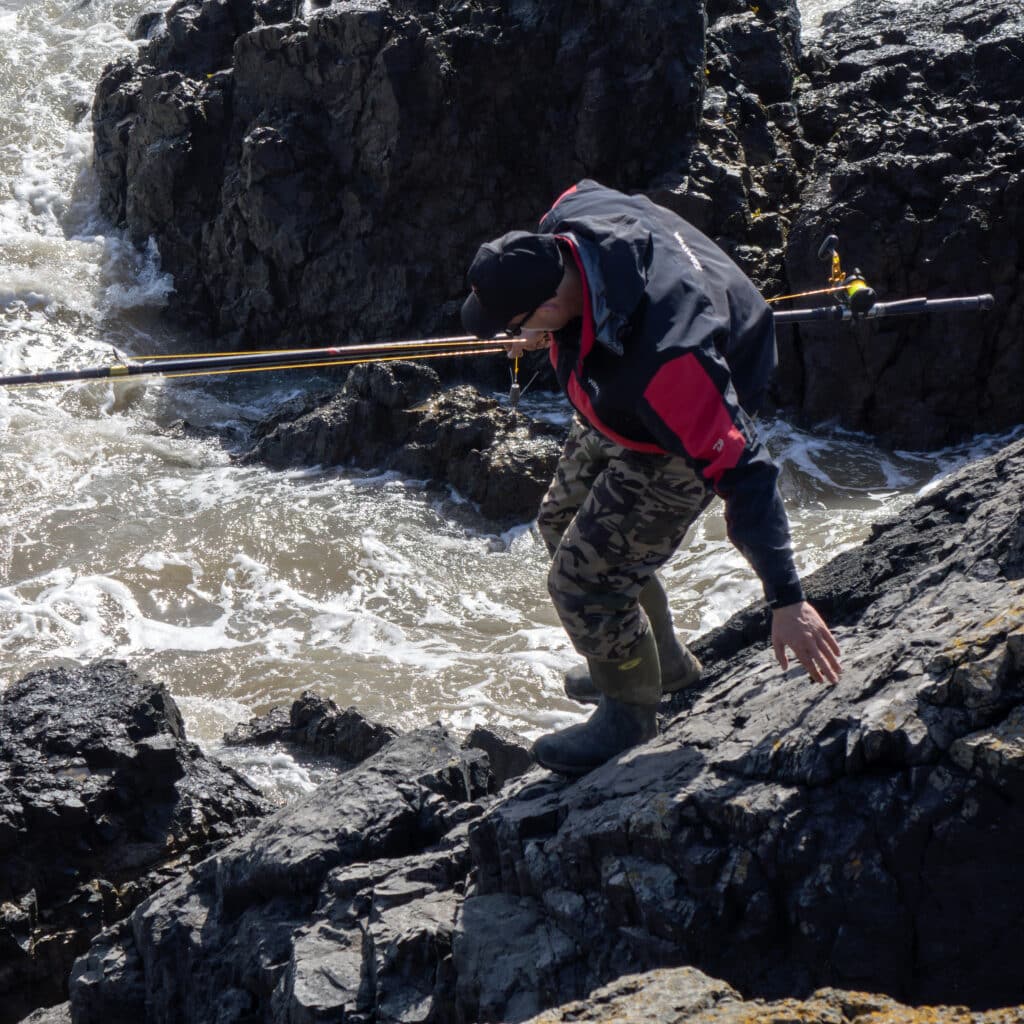
Tying a shock leader
Tying a reliable knot is hugely important and none more so than when using a shock leader.
If there was ever a knot to practice tying, it would be mainline to shock leader. Although the quality of your knot will not effect the cast, and remember this is why we use a leader in the first instance, it will mean that when fishing over any snags, a poor knot will part with little pressure.
There are many types of shock leader knot, but the two that I would recommend are the Spider Hitch and Bimini twist. The Spider Hitch is incredibly easy to tie and with a little practice can be mastered very quickly. The Bimini is the strongest knot of them all, but takes some thinking about when you’re new to fishing. Take a look at our YouTube channel where you will find tutorials on how to tie both of these knots. Practice, practice, practice, and you will be tying a strong, reliable and small knot in to time at all.
How often should I change it?
This really depends on how often you are fishing and over what kid of ground. If you’re fishing over the rough, check your shock leader over every other cast. Check it at the end of every session and if there is any signs of abrasion, change it.