

Blog
Tripods and rod rests- What do i need?

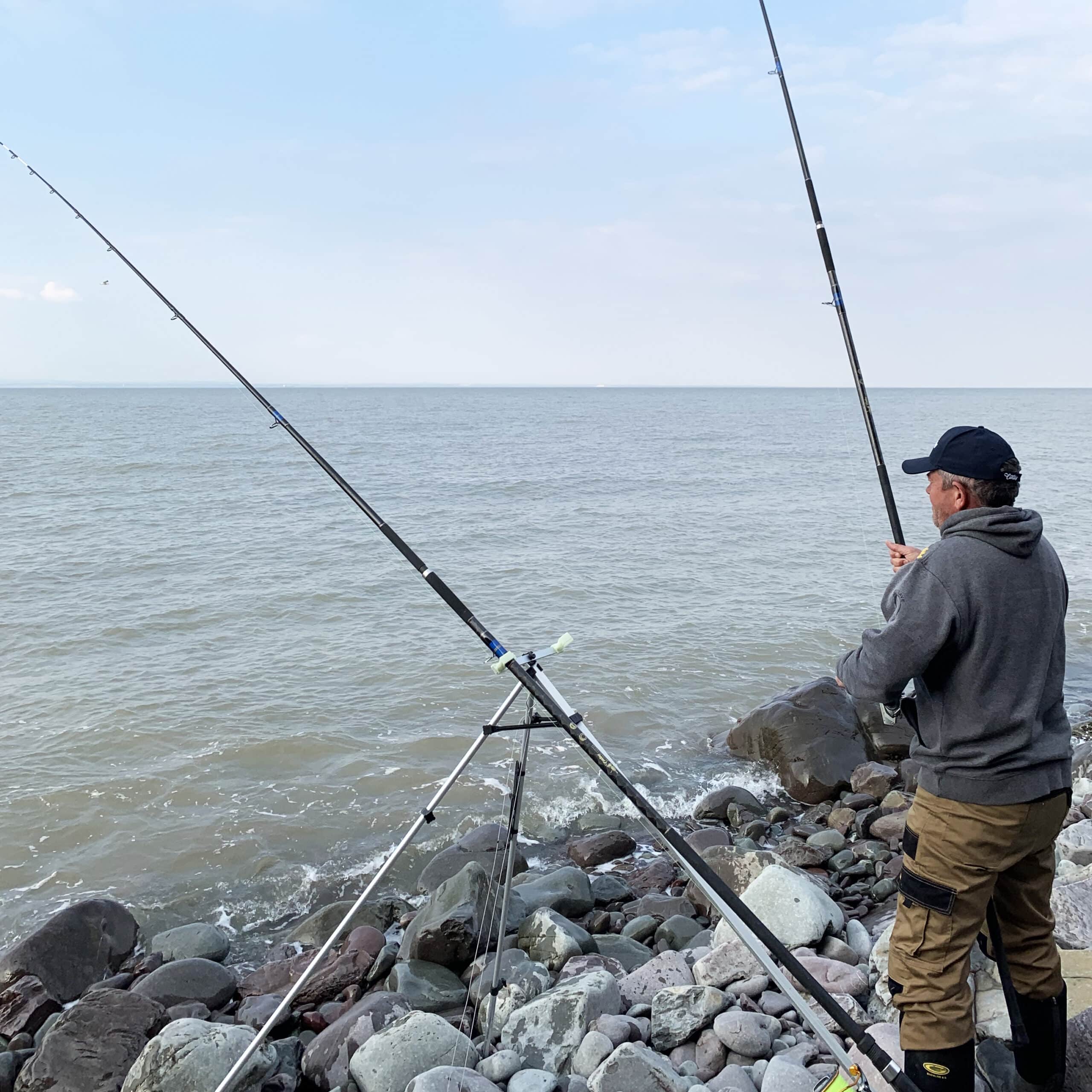
It would be nigh on impossible to hold your fishing rod for the duration of a shore fishing session and so a rod rest of some description is one of the basic essentials when you begin your sea angling journey. Waiting for a bite can take time and having a solid stand of some description that will safely cradle your rod (or multiple rods) will make the whole experience far more enjoyable.
Jansen Teakle explains the options and offers some advice when it comes to supporting your pride and joy during a fishing session.
Long gone are the days of fashioning a couple of bamboo canes in to a crude V shape that would collapse when the rod was removed. Tailor made aluminium tripods offering numerous advantages are now common place and as much thought is applied to their design as the rods that they support. So what should we consider when it comes to choosing the right rod rest for the job?
Firstly, let’s consider the rods that we’re looking to support. As the majority of beach anglers are now using rods up around 14’ in length, we need to make sure that these longer models can be well supported. A 14’ rod is obviously quite long and if you’re fishing in high winds or strong tides that will pull on your rod tips, it’s essential that they’re well supported.
Shorter tripods won’t support a rod of this type, so it’s advisable to choose a tripod of 7’ in length, pretty much as big as non-telescopic tripods get. If you’re using a shorter rod of between 12 and 13’ in length, a 6’ tripod, pretty much the bench mark size, is perfectly adequate.
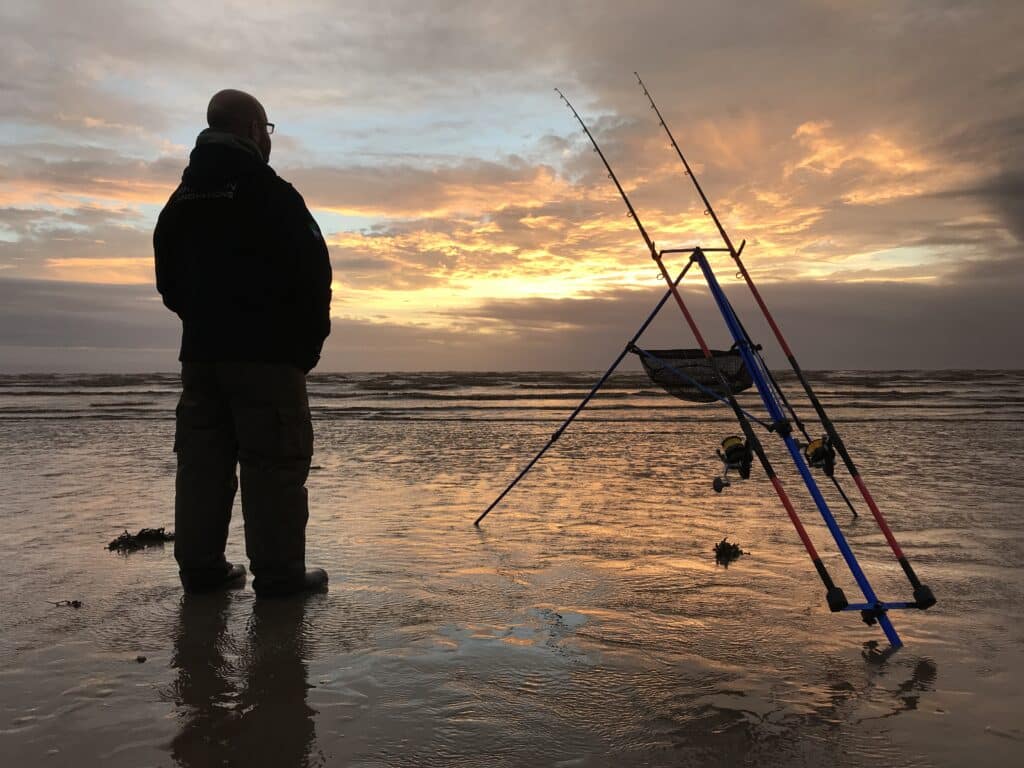
These assumptions are based on fishing from a beach where the legs can be placed on even ground. The majority of these tripods feature cups that the butt section of your rod(s) will slot in to meaning that they are supported clear of the deck, which is particularly useful if the ground underfoot is muddy as it will save dirtying your rod butts. Adjustable cups are also a common theme, and will enable you to get your rod tips up nice and high to prevent your line from being pounded if there is a big sea crashing in the edge. A stable tripod will allow for this even on a windy day.
Shorter/telescopic tripods
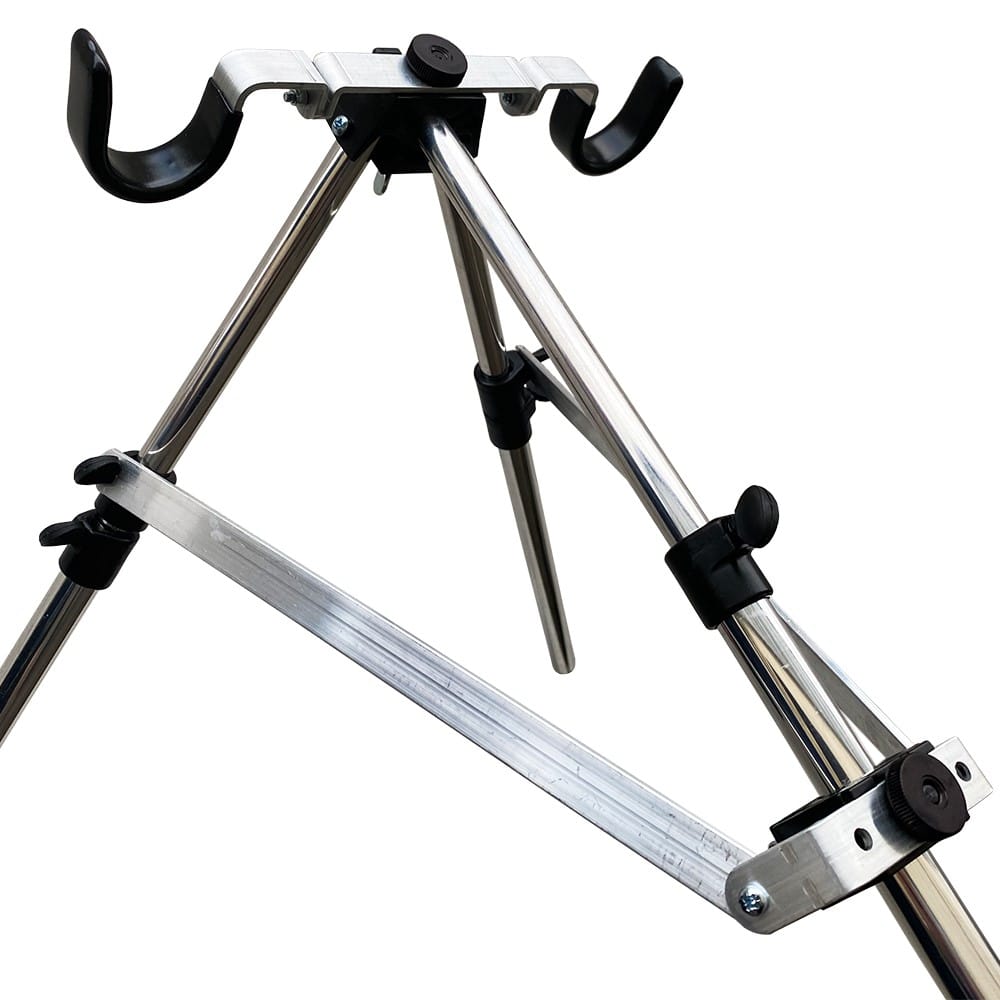
There are numerous shorter tripods on the market, so why should we choose one of these in preference to the traditional full length models as described above?
Not everyone wants to fish from a flat shingle or sand beach. Many anglers enjoy fishing from rocks, uneven reefs and manmade platforms where a regular tripod just wouldn’t be practical.
Telescopic legged tripods can be adjusted to suit the terrain and will still offer adequate support to your rods. Chances are, that you’ll be fishing from an elevated position and so the rods don’t need to be pointing up at the sky when in position. Rod tips can be lowered to eye level or lower and bite detection will be easy. These kind of tripods are often supplied with butt cups, but that doesn’t mean that they have to be used.
Another reason for a shorter tripod is that they are often considerably lighter and so if you’re embarking on a long walk to your mark, they will help to lighten the load.
Correct positioning of these tripods is essential to maintain stability, but with some thought is very possible. Always ensure that your rods are positioned in such a way that a runaway bite, a lump of weed on the line or any other unseen debris in the water can’t drag your rods over the top. Obviously if large fish are on the cards, you should set your reels drag and or ratchet in order for a fish to take line, rather than pulling on the rod tip to the point that the whole lot is pulled over the side.
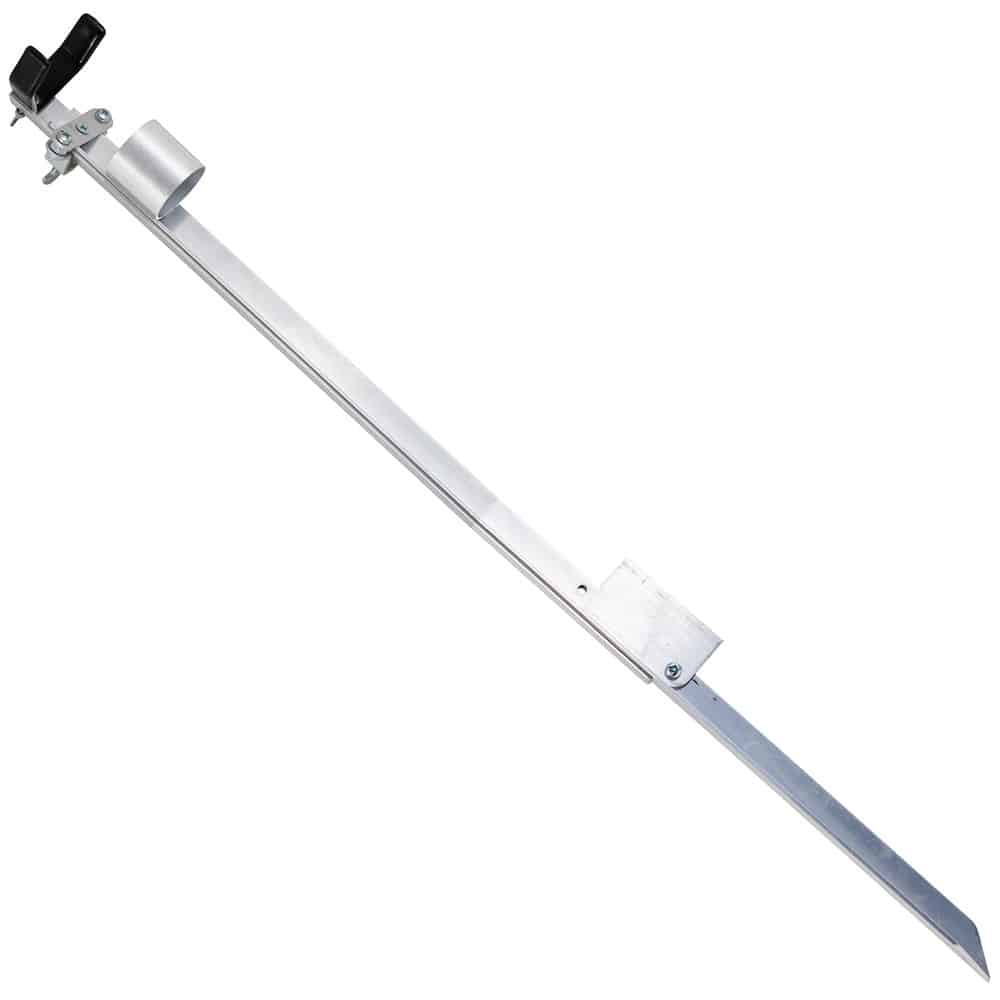
Sand Spikes
The perfect solution if you intend to fish from soft ground such as sand, mud and shingle. Sand Spikes are very light to carry so are perfect if a long walk is on the cards. Although they are not as stable as tripods, they offer sufficient stability and are especially popular across Europe where continental style rods are predominantly used. They certainly have their place, but traditional tripods probably outnumber sand spikes by around 30 to 1 in terms of popularity.
Extras and add-ons
Once you’ve purchased your tripod, be it a conventional single length model or a telescopic version, you can add various different gizmos to improve it.
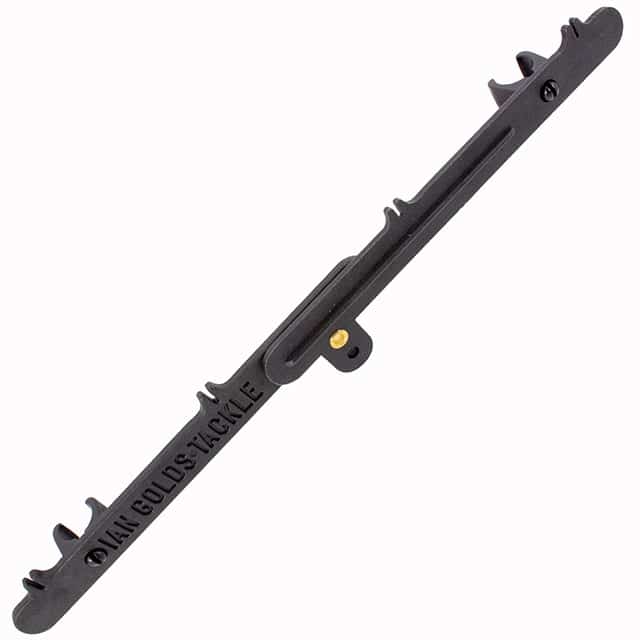
Many anglers like to hang spare rigs from their tripod and most do come with a hanging hook of sorts, but you can also buy extra rig hangers that slide on to the legs, as well as trace bars that clip to the two front legs and also act as a brace.
For the angler that wishes to use three rods, clip on extra rests that sit on the legs are popular, as are triple head and cup sets that replace the doubles that most tripods are supplied with.
Tripod nets can be added and are supported by the three legs, meaning that you can keep bait and accessories such as scissors, elastic and bait tools close at hand.
If stabilisation is key, there are numerous leg braces that will prevent the legs from splaying open.
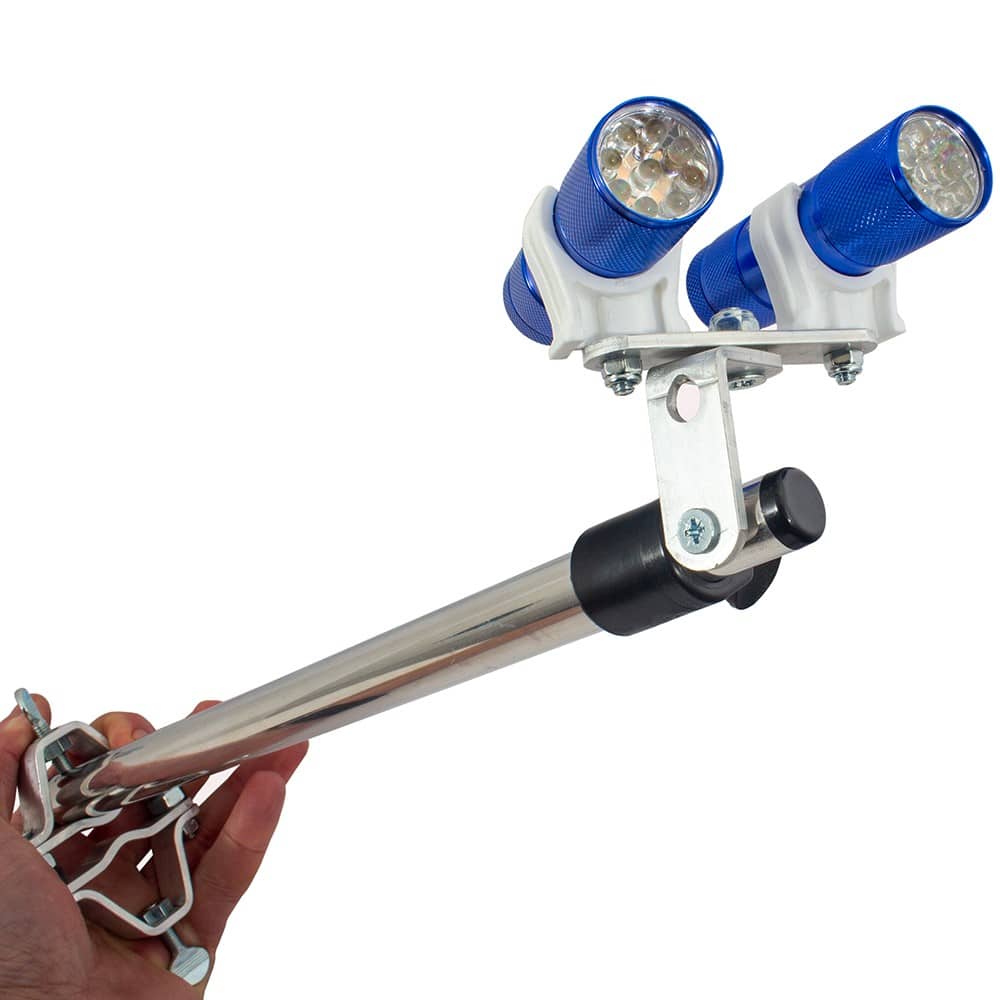
If you’re a night fishing fanatic, there are some fantastic clip on torch options now available that will illuminate your rod tips at night, meaning that you can save the battery power of your main lighting unit.
The possibilities are almost endless, and there are loads of great additions available for tripods now. Why not take a look at our huge selection and see what might make your tripod even better?