


Blog
Plaice Fishing on the Sussex Coast

BY GEM STAPLETON
Who should read this blog:
anglers interested in plaice fishing, anyone looking for the best spots to catch plaice along the Sussex coast, and those wanting to sharpen their knowledge for targeting this fantastic flatfish.
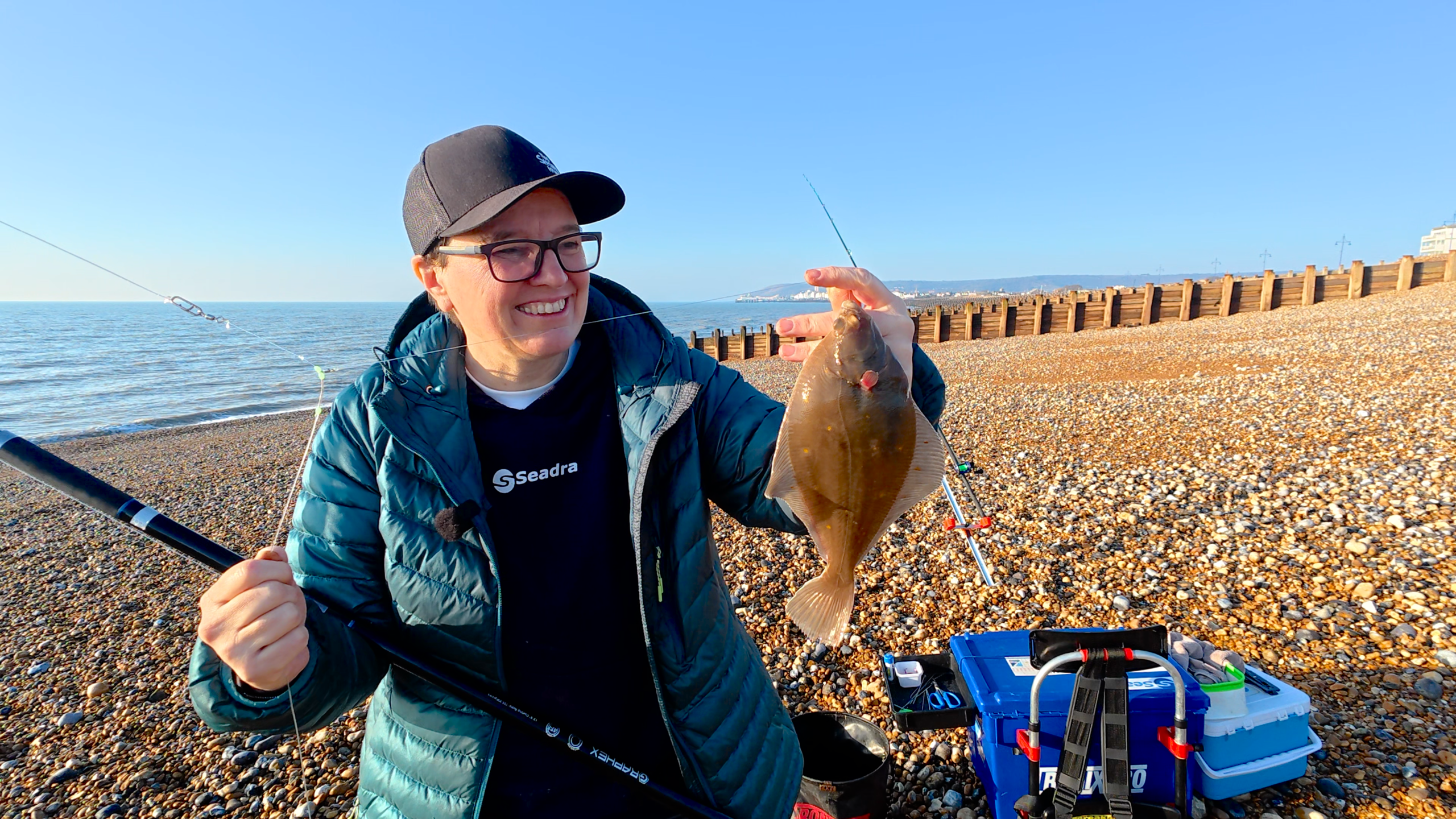
AN EARLY SPRING PLAICE CAUGHT AT EASTBOURNE
Spring is here — and with it comes the return of one of the most exciting shore fishing opportunities of the year: plaice are moving back onto the Sussex beaches, the days are getting longer, and suddenly the coast feels alive again. Crisp mornings, bright sunshine on the water, and rods bending on the shingle — for me, it’s one of the best times of the year to be out fishing. After the long winter grind, March signals a real turning point, when the changing seasons bring a welcome surge in fishing opportunities.
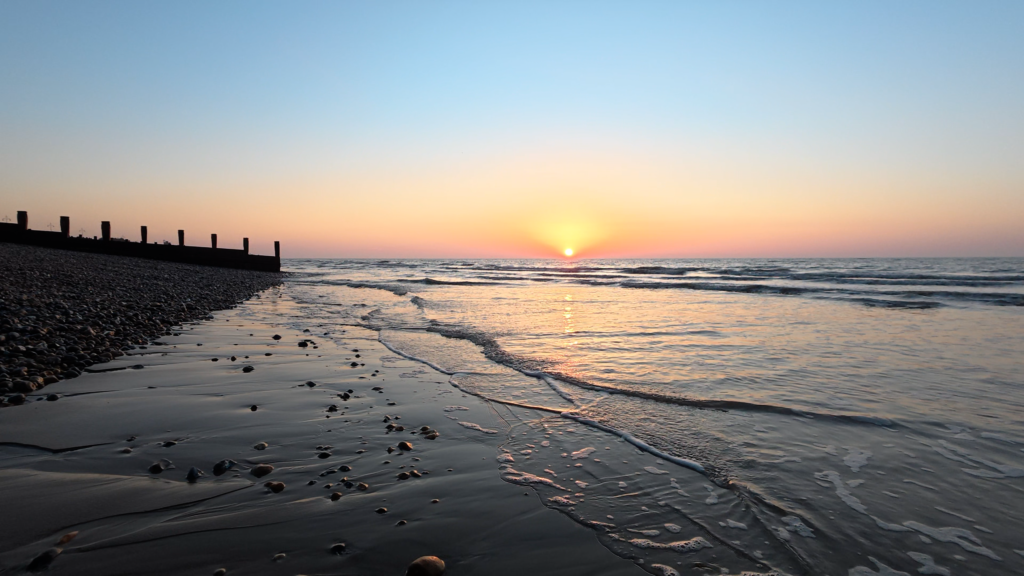
A GLORIOUS SPRING SUNRISE ON A CRISP MORNING
Personally, I have a significant dislike of February. It’s long, dank and, particularly in 2026, full of wet, overcast grey days that seem to drag on forever. To make matters worse, it’s usually the poorest month of the year for the kind of fishing I enjoy. In short, February just sucks. What keeps me going is the knowledge that the longer days are just around the corner — and, with them, the arrival of plaice along the Sussex coast. Almost overnight, the fishing improves, anticipation builds, and the beaches start to buzz with anglers again. With plenty of rigs tied over the winter and the seasons finally changing, it was time for me to hit the beach and employ my preferred tactics for these beautiful flatfish.
Venues
I’m incredibly fortunate that Sussex boasts some of the best plaice fishing in the country. Every spring, anglers travel from across the UK to fish this stretch of coast, with Brighton widely regarded as the plaice hotspot. It’s easy to see why. Quality fish regularly show up here, with stunning plaice pushing 50cm alongside plenty of smaller specimens that keep the rod tips twitching.
From March onwards, when calm seas and clear water arrive, Brighton’s beaches can quickly fill with hopeful anglers. If you want your pick of the marks, it pays to arrive early. Distance casting can make a real difference here, with those sending a lead further often picking off the bigger fish — although plaice can still be picked up closer to the shoreline. One thing to keep in mind is parking: it isn’t cheap and Brighton’s parking enforcement is famously efficient, so make sure you pay promptly.
Three of my other favourite marks are Shoreham, Seaford and Eastbourne. These venues often have cheaper — and sometimes free — parking depending on exactly where you set up. Several spots even allow you to park right beside the beach, making them ideal for anglers who prefer not to trek long distances loaded with gear.
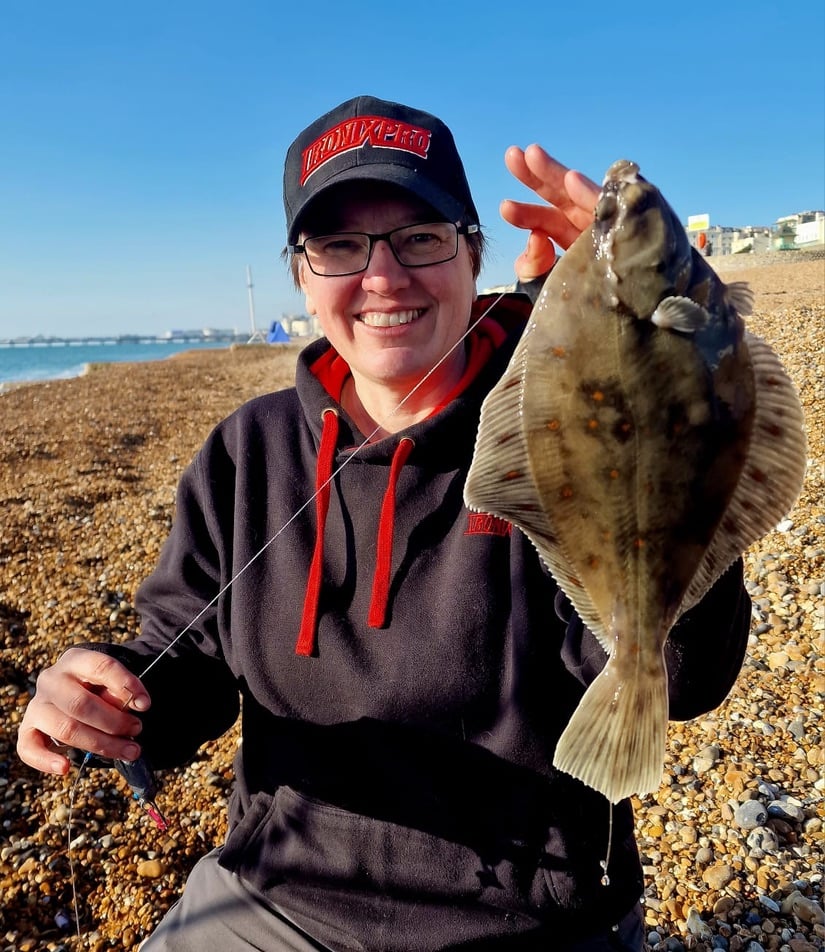
A STUNNING BRIGHTON PLAICE
Seaford is particularly convenient. Parking at the Buckle car park provides toilet facilities and quick access to productive ground. One tip though: check the Newhaven and Seaford Sailing Club calendar before heading down. When events are on, the launching and recovering of boats can make fishing the area a bit frustrating.
All four venues tend to fish best when there’s a decent pull of tide. My favourite conditions are building spring tides, when the water really starts to move, combined with clear water. Both the ebb and the flood can produce fish, but in my experience it’s when the tide really gets going that the plaice switch on and the bites start coming thick and fast.
Bait, Rigs and Other Essential Tackle
Alongside choosing the right venue, getting your bait and rigs right is critical when targeting plaice. These fish are enthusiastic feeders, but they can also be picky, so matching baits to what they’re naturally feeding on can make all the difference.
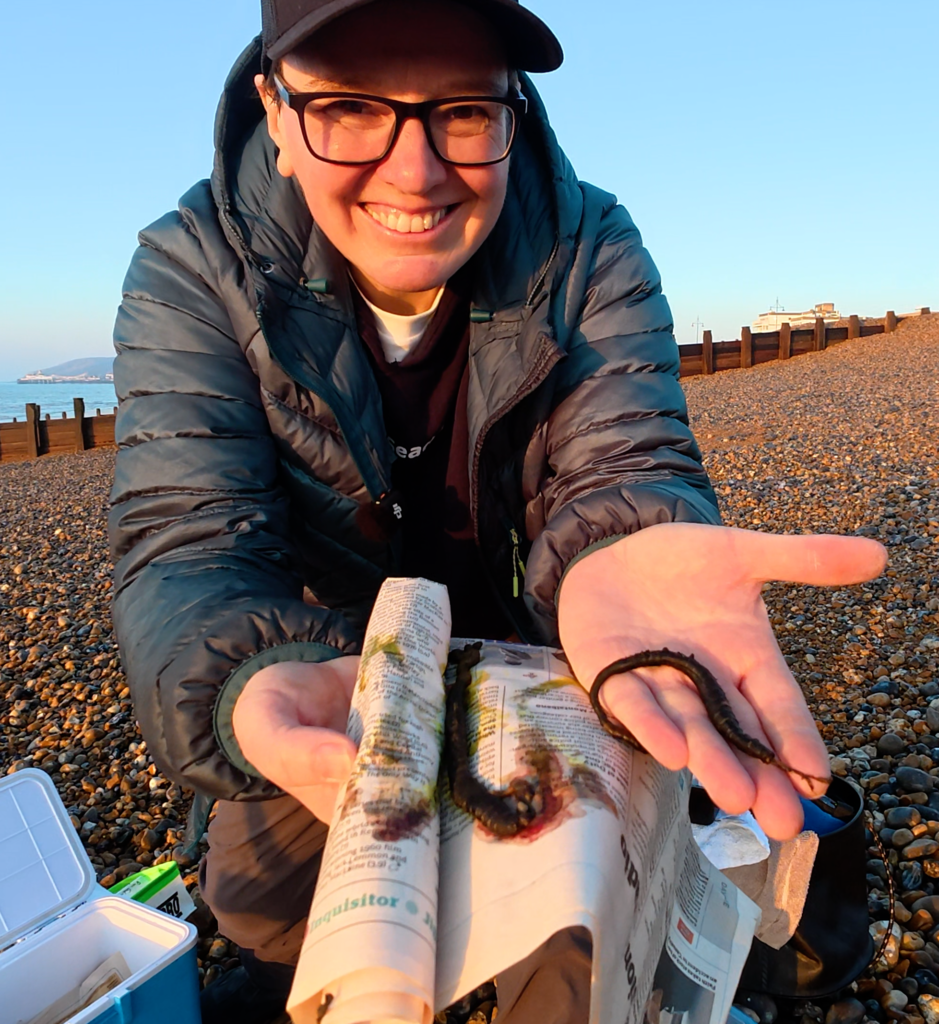
BLACK LUG PICKS UP THE PLAICE
Along the Sussex coast, lugworm is the standout bait. With vast black lug beds scattered along the shoreline, it’s no surprise that plaice hunt them out. Fresh lug is usually the top performer, but there have been sessions where lightly oiled- and-salted frozen lug has out-fished everything else. It’s always worth bringing a mix and letting the fish decide.
Sussex waters are also rich in mussel and razor beds, making both superb alternative baits. These natural food sources are firmly on the plaice menu. I’ll often bring a few ragworm along as well, although in my experience the other baits tend to pick up more fish overall.
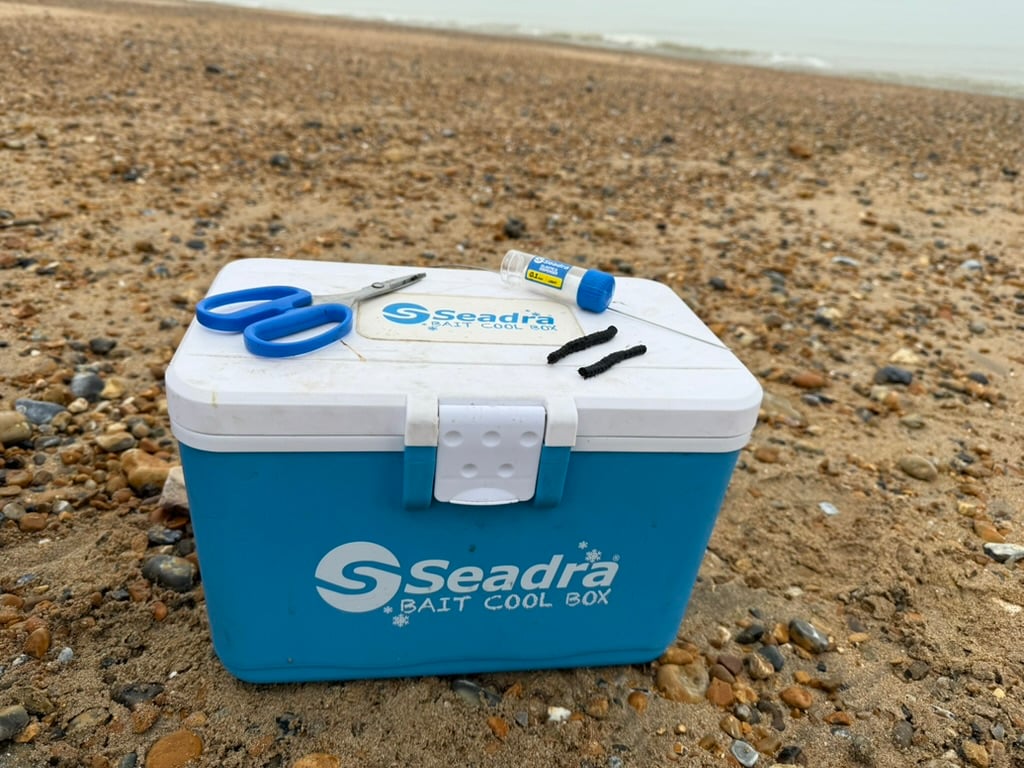
Keeping bait in prime condition is essential, so everything goes straight into my 8L Seadra Cool Box, along with an icepack, to keep it fresh throughout the session. When it comes to presentation, bait elastic is a must. Plaice are experts at delicately sucking worm off the hook, so I nearly always bind my worm baits securely with elastic. For delicate offerings like mussel and razor, bait elastic isn’t optional — it’s essential.
A tool like the stubby Spooligan Skewa also makes baiting up with mussels and razors far quicker and easier. The Seadra Bait Elastic Dispenser is particularly handy, available in three different thicknesses of elastic, with the fine 0.1mm version being perfect for all kinds of plaice baits.
As with any type of fishing, matching the rig to the target species is critical. Two key things to consider are the distances required to reach the fish and the sizes of their mouths. Getting these details right can make a difference to your catch rate.
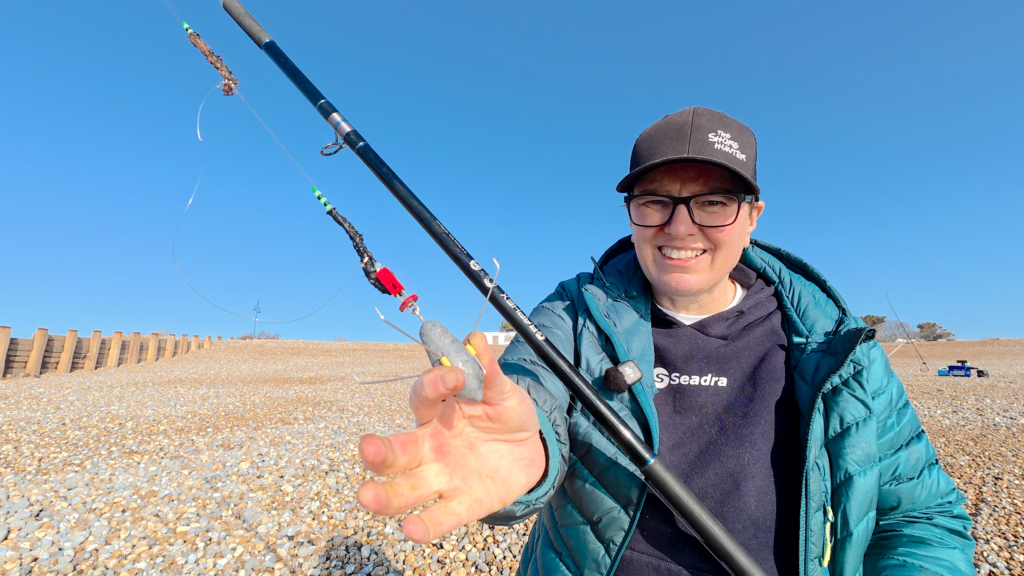
When it comes to distance, clipped-down and streamlined rigs are the way to go. My personal favourite is the loop rig, which tucks two baits neatly behind the lead for high casting efficiency. In myexperience, the loop rig will comfortably outcast a standard two-hook clipped-down rig. If you’re not convinced, try casting both when baited up during your next session — the difference quickly becomes obvious. If I need even more range, I’ll switch to a bar rig with a single hook. You lose a little scent trail compared with fishing two baits, but the extra distance can be well worth it when the fish are holding further out.
Hook size is equally important. Plaice don’t have huge mouths, so I generally stick with a size 4 or size 2 hook. Whatever bait you’re using, make sure the hook point remains nicely exposed and consider offsetting the point — this simple detail will definitely your improve hook-up rate. This is because plaice are masters of spitting hooks, which is that much more tricky with an offset point.
Then comes the age-old question: bling or no bling? Personally, I keep things simple. My approach to Sussex plaice fishing is very much distance first, so I tend to fish with minimal or no attractors on the rig. If I do add anything, it’s usually just one or two small pop-ups such as the Seadra Floating Bead Stopper. Paired with a sequin, it also doubles up as an essential bait stop on the snood.
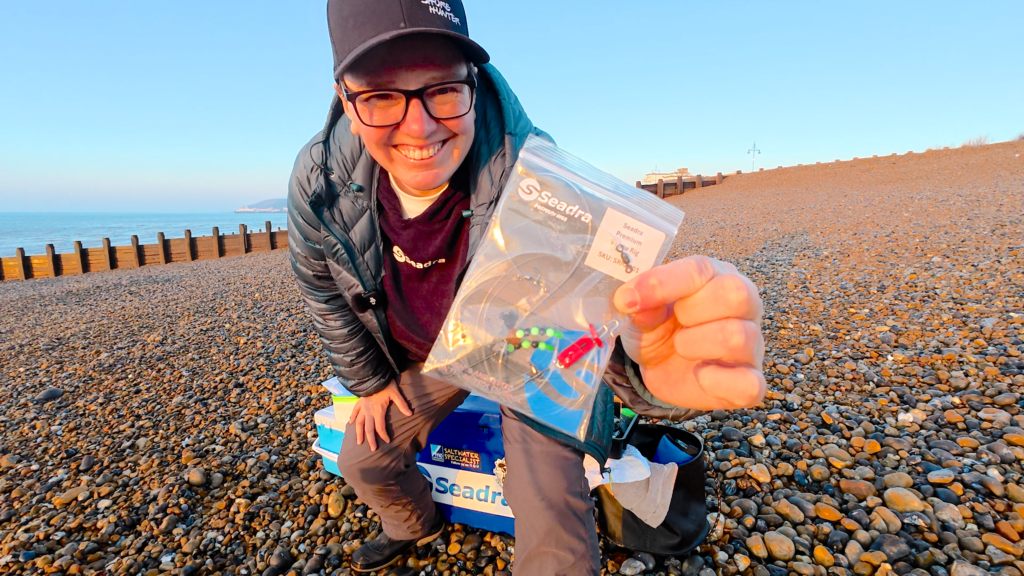
If rig tying isn’t your thing, there’s always the option of ready-made rigs. The Seadra rig range includes several styles designed specifically with plaice fishing in mind, making it easy to get started straight away.
Hitting the Beach
Armed with the right rigs and fresh bait, it’s finally time to hit the beach. Heading out for a plaice session always fills me with excitement — rods ready, rigs prepared, and the hope of seeing a few spotties on the shingle before the day is done.
Because some Sussex marks are so popular, I usually aim to arrive early regardless of the exact state of the tide. I firmly believe that putting in the hours often brings the bestrewards. Even away from Brighton, the beaches can get incredibly busy when the plaice are in. I recently took a walk along Seaford beach for a social catch-up with a few anglers I know and it was absolutely rammed — anglers stretching as far as I could see along the shoreline.
Arriving at dawn, or sometimes even earlier, gives you time to get set up, make those first casts, and hopefully start finding fish. It’s not unusual for me to spend eight hours or more on a plaice session, maximising the chances of fishing through the periods when the fish switch on and start feeding.
A SEADRA PREMIUM PLAICE RIG, BAITED WITH BLACKS AND READY TO LAUNCH
I nearly always fish with a grip lead. With busy beaches, grips help prevent lines drifting across neighbouring anglers, but a key reason I use them is hook-up rate. While a plain lead can sometimes produce more bites, I generally hook and land far more fish when using grips. My lead of choice is a 5oz SKM grip — I find the SKM design casts further than most other patterns, which again fits with my distance-first approach. When the tide really starts pulling, though, I’ll sometimes step up to a 6oz to keep everything firmly on the seabed.
When one of these beautiful fish finally slides onto the shingle, the next job is unhooking it safely. Plaice are well known for swallowing hooks deeply, and their relatively small mouths can make unhooking tricky. It’s well worth learning the through the gills method, where the line is passed carefully between the gills and the gill plate so the hook can be turned and slipped out. A good pair of forceps or a similar tool is invaluable for this.
Occasionally a fish will be hooked too deeply even for this method to work. In those cases, provided the fish is of legal size, it comes home for my wife to enjoy for dinner. But for me, nothing quite beats the moment when a carefully unhooked plaice kicks away strongly and disappears back into the depths after giving me the pleasure of catching it.
Those who know me — or who follow my YouTube channel — will already know that flatfish are my absolute favourite quarry. But every angler has their own special species they love to chase. Whatever fish you decide to target this year, here’s hoping 2026 is packed with tight lines, bent rods, and unforgettable sessions on the coast.
About the Author
Gem Stapleton has been fishing since 1977, when she first picked up a rod at just three years old. She has a particular passion for targeting flatfish from the shore, with a personal best plaice of 49cm, although she enjoys almost every form of beach fishing.
A highly accomplished angler, Gem previously won Gold representing the England Ladies team and remains the only female angler ever to have won the EFSA England Shore Championships. Despite these competitive achievements, her real passion lies in pleasure fishing whenever she can get down to the beach.
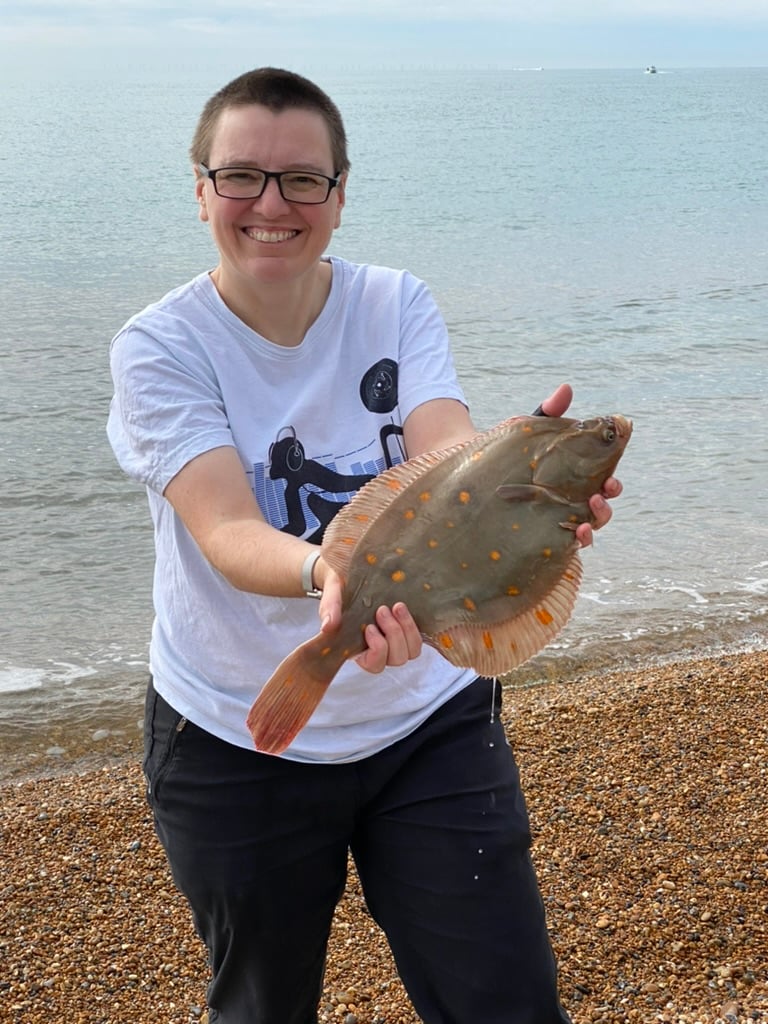
A 48CM PLAICE CAUGHT AT SEAFORD