

Blog
Understanding lines – Monofilament, Braid And Fluorocarbon

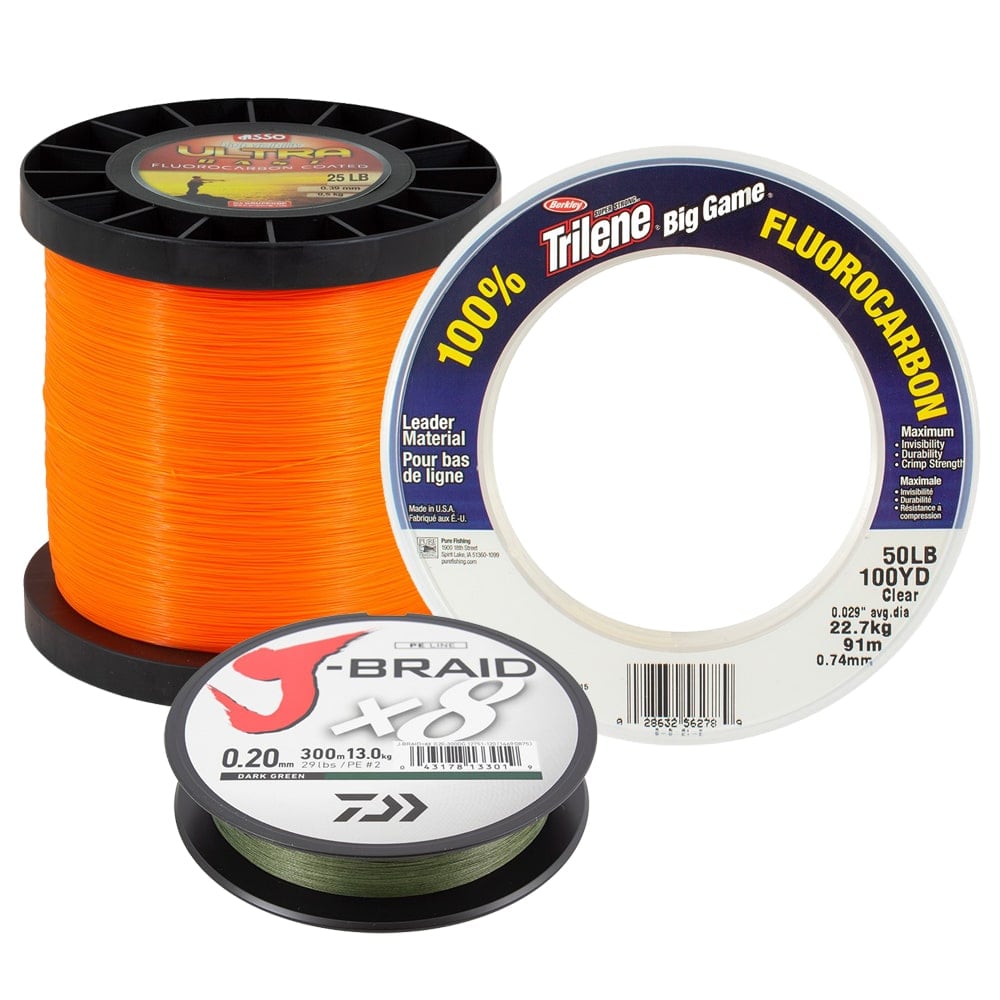
There are three mainstream fishing lines that are used for UK saltwater fishing and it’s important to understand what each is used for. Here is a quick reference guide that will enable you to understand the properties of each and help you to get the most from your fishing.
Monofilament
Monofilament would be regarded as a general-purpose bog standard fishing line. It is available in a wide range of colours and breaking strains to suit different situations. Monofilament’s primary use is as a mainline (the line that is on your fishing reel) but it is also used as a shock leader and as a rig-making material.
It is affordable, compared to braid and fluorocarbon, easy to use and offers trouble-free fishing. It is reasonably hard wearing but susceptible to damage from salt water and UV light from the sun over a period of time. Monofilament should be stored away from bright sunlight to prolong its lifespan. Typically, it is used as a mainline for shore fishing in diameters between 0.30mm and 0.45mm, though it is possible to use lighter or heavier lines depending on the task at hand. Thinner line will cast further but is weaker, the thicker line will not be cast as far but will be stronger. For rig bodies, monofilament measuring typically between 0.70mm and 0.90mm is used, and for traces, lines of between 0.40mm and 0.60mm are used, but again, this is just a generalisation.
In the case of monofilament, it’s good practice to buy based on diameter rather than breaking strain. Diameter is far easier to measure accurately than breaking strain. Monofilament can be purchased on bulk spools and is the cheapest of the three lines in discussion here. Monofilament is, without doubt, the most popular of the three lines we’re looking at here and offers hassle-free use for new and established anglers alike.
Braid
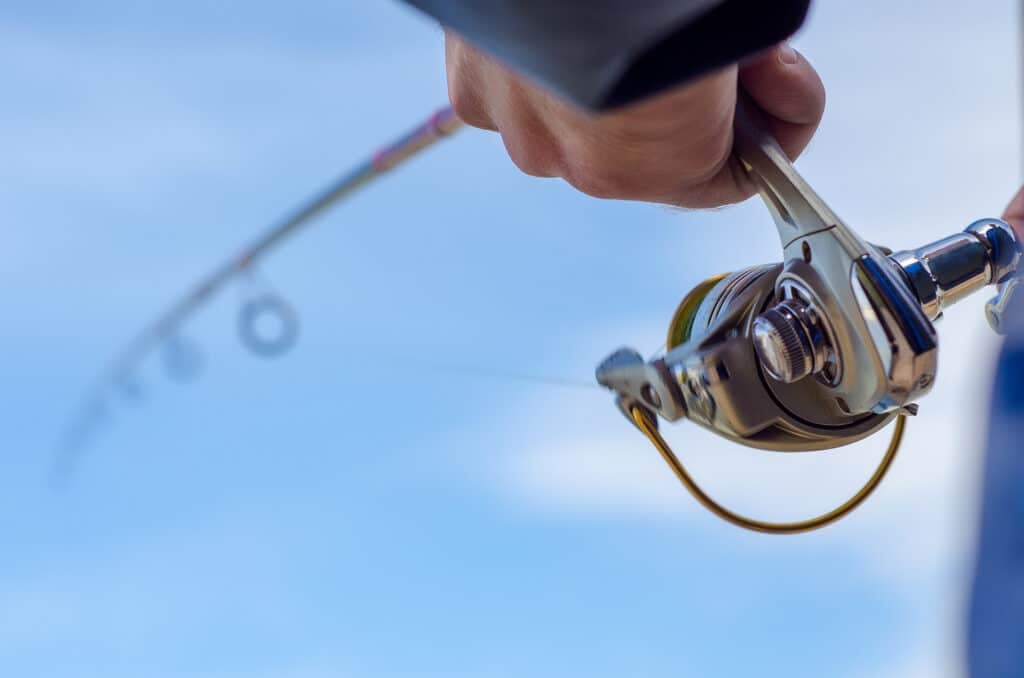
Braid revolutionised sea angling around 15 years ago when it found favour with sea anglers who valued its lack of stretch and ultra-low diameter. Even heavier breaking strains remain low in diameter with a braid of around 60lb breaking strain measuring the same diameter as a typical 15lb monofilament (approximately 0.35mm). This means that strength can be retained, the diameter is low enough to ensure the potential for long casts and a shock leader is not necessary.
Braid does not stretch, meaning that it’s very direct and you can see every bite as it happens. Because of this lack of stretch and consequent early indications that a fish is showing interest in your bait, it’s important not to strike without giving the fish a little extra time to find the hook. When casting, braid is unforgiving, as it does not stretch as mono’ would. Unless you’re using some kind of finger guard, there is the potential for a nasty line cut to the finger, so this should always be considered. Many anglers will still use a monofilament shockleader when using a braid mainline.
Braid is popular with boat anglers and makes an excellent mainline for this style of fishing. The lower diameter mainline cuts through the tide meaning that lighter leads can be used, both when at anchor and when fishing on the drift with lures.
Again, the lack of stretch is useful when it comes to detecting the sea bed. This means that your tackle can be fished as close to a wreck or other obstruction as possible. Braid is fantastic for lure fishing, as again it offers direct contact with the lure. A 20lb breaking strain braid is popular as it offers ample breaking strain and a very low diameter, enabling even light lures to be cast extremely well compared to monofilament. Braid is fairly expensive, but considering its life span, it should be considered an investment. Braid can be left on a reel for several years without showing any signs of wear or a reduction in performance, meaning that it will still be going strong a long time after you have had to change a monofilament mainline.
Fluorocarbon
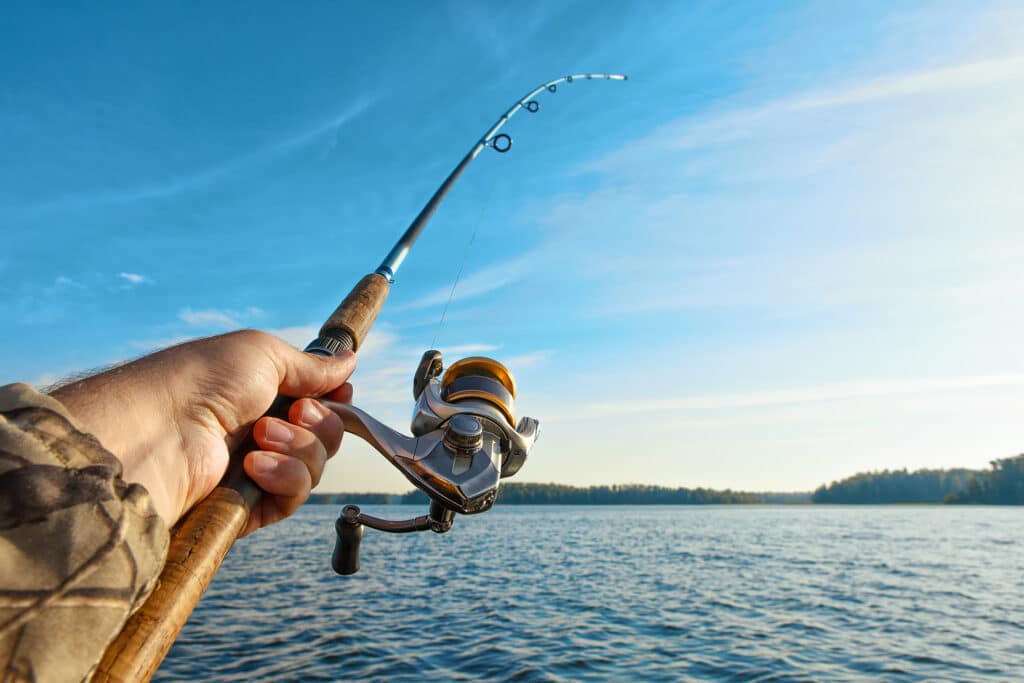
Fluorocarbon is a relatively new material in mainstream sea angling, having only found favour with many sea anglers across the last decade. At a glance, it shares the same qualities as monofilament, but is often stiffer in consistency and harder. The key benefit to using fluorocarbon is that in the water, it is practically invisible. For this reason, it is often used as trace lines when targeting finicky fish in clear water. Lure anglers often use a short length of fluorocarbon line (approximately fifteen inches) at the end of their braid mainline and anglers fishing on the drift use fluorocarbon traces of around twelve feet when fishing on the drift with artificial lures. Per meter, fluorocarbon is perhaps the most expensive of the three lines discussed here, but as it is often only used in small quantities, even an average-sized spool will last for many sessions.