

Blog
Fenix HP30R v2.0 Headlight Review- By Jansen Teakle

As someone who spends a lot of time by the water at silly o’clock, both guiding and fishing myself, I firmly believe that the first safety precaution you can take is to strap a reliable light source to your head. It sounds blatantly obvious, but the fact that without a decent head torch you can’t see a thing and are potentially subjecting yourself to huge danger without one should be anyones first consideration when it comes to fishing after dark.
It sounds ridiculously obvious, I know, but even recently I witnessed a pair of anglers fishing from a beach sharing a phone torch between them. Okay, so it was a shingle beach and the sea was relatively calm, but if that phone battery had died, they would be leaving tackle on the beach without realising it at best. Worst case scenario…. You get the picture.

I’ve always been a fan of Petzl headlamps since the days of the Zoom model, but more recently, the Ultra and its successors. The Petzl family of lamps are incredibly well built to a high specification, but you certainly pay through the nose for the privilege. Designed for pot-holing, you’d like to think that they would stand up to the rigours of sea angling and I have to say I’ve yet to have any issues with the three lamps I have owned across the last decade. The fact that I’ve owned three is simply that the tackle tart in me had to own the latest versions and I dare say that the original would still be going strong now. But enough about Petzl.
Working in the tackle trade I often find myself with new toys laid before me and I’ve seen plenty of headlamps come and go in my time. When we started stocking Fenix lamps, some years back now, I eagerly took each model from its box and had a good look. They were good, well thought out headlamps but in comparison to the Petzl I was used to, it could be said that they were a little fiddly to operate and the battery life was somewhat lacking. The dual control buttons took a bit of thinking about compared to the Petzl’s simple knob that that was easily accessible and cycled through the various light outputs.
In all fairness these Fenix lamps were a darn sight cheaper than the Petzl models and I began studying them closer in an attempt to justify that eye-bulging price tag I had inflicted upon myself over the years by choosing Petzl. I reached the point where I was impressed enough to invest in a couple of these Fenix models and although they were hugely capable and more than perfectly adequate for most situations, I found them both becoming secondary units, stowed away as back ups and reached for the Petzl every time. But why?
First and foremost, the majority of my fishing is from rock ledges high above the water. It’s a dangerous environment to fish within and one step out of place could spell disaster. Access to some marks is also a bit dicey and for this reason I confess to being a power freak- often whacking a headlamp right up to full power or somewhere close to it anyway. On a mark where fellow anglers are seldom present, I don’t see this as an issue and also have no qualms about light on the water potentially scaring fish. Quite simply, when I’m fishing in the dark, I like my surroundings to be as clear as day and with my eyesight being not what it once was, I need all the help I can get! For this reason, run time and battery capacity has always been top of my list and for me, the Petzl ticked that box in style. Trials with the Fenix lamps saw me getting through a number of batteries during a lengthy session and the last thing I want to be doing is faffing around having to change batteries. That said, I fully accept that if a lamp is operated at full power, it’s not going to run forever and that’s my problem, not the lamp’s. Those fishing at a safer location and using these lamps a little more conservatively will no doubt be more than happy with Fenix models such as the fantastic HM65R and HP25R v2.0, both brilliant lamps for an average after dark session. Most anglers will also have the sense to use their lamp responsibly and so keep the output down when fishing in close proximity to other anglers.
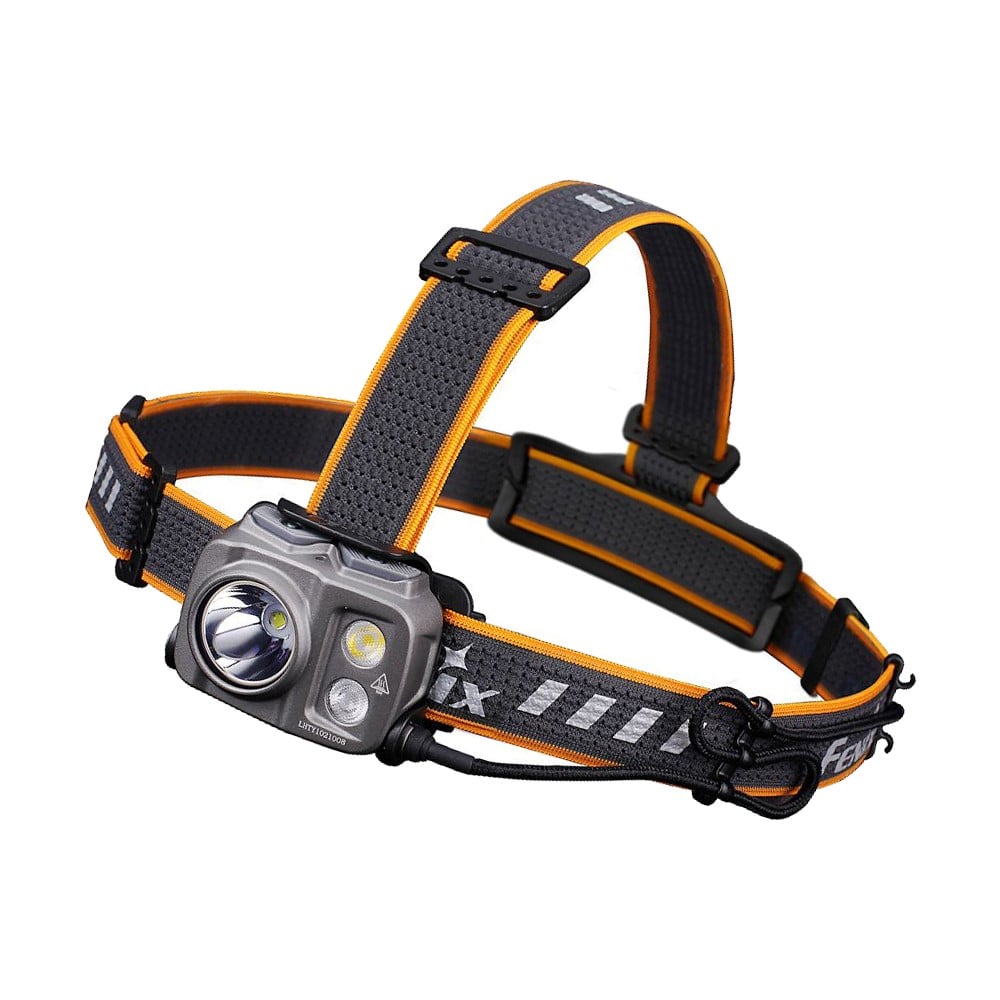
When I first clapped eyes on this new Fenix HP30R v2.0 I was immediately drawn to the rotary switch on the side of the torch body. It was close to what I was used to and to me seems a more user friendly way of operating a unit, especially with cold, wet hands. A friend had actually purchased this model and was already singing its praises, so with some gentle persuasion it was soon stashed in my bergen and ready to be put through its paces.

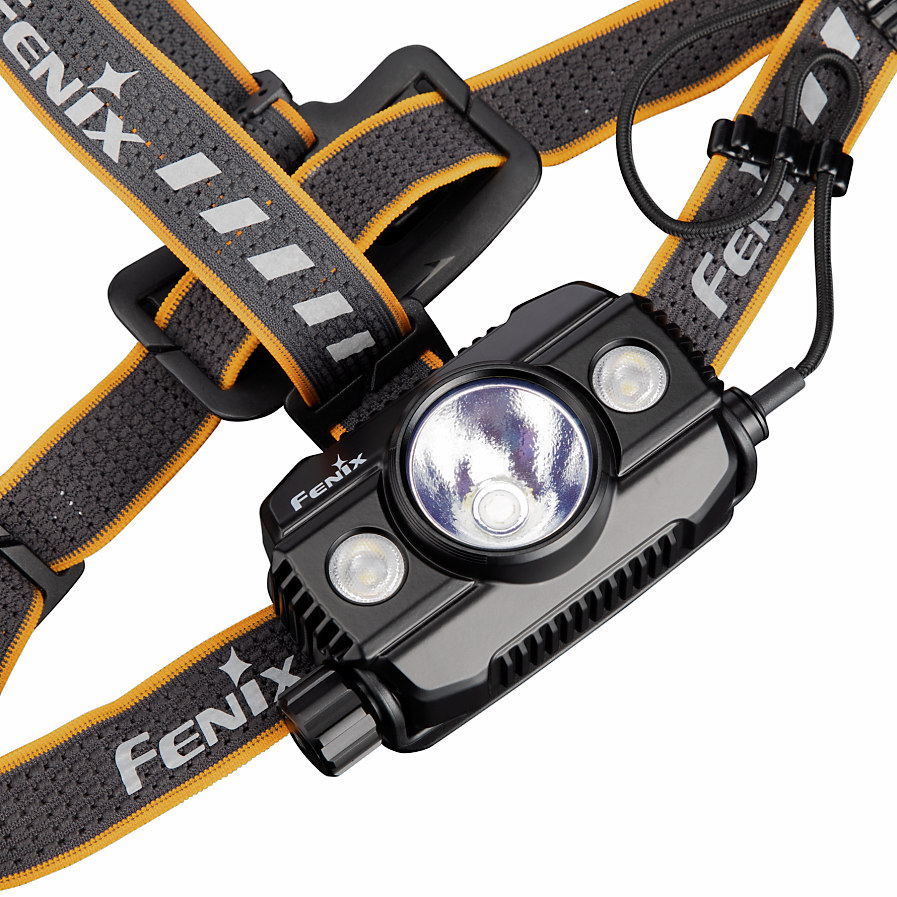
That first session was on a particularly black and drizzly night and it was actually the Petzl that I strapped to my head as I negotiated the narrow cliff top goat track down to the mark. (Point of note- these images were taken a few nights later at a more friendly location) Once the rods were cast and I settled in to my surroundings, it was time to take out the new toy and see just what the fuss was all about. Reading instructions that come with anything electrical has never been my strong point (do many of us?), so it was a case of fiddling with the rotary switch and seeing what might happen.
Turning it one way activated a spotlight, turning it in the opposite direction operated the floodlight. Seemed simple enough.
What’s more, the button in the centre of the knob activated the opposing setting so it was possible to combine the two beams to create the desired pattern. For example, turn the knob to select the flood light, then press the button to bring the spot in to play at the same time.
That might sound complicated but it’s really not. To be honest, I was more than happy to leave the button alone and just cycle through the outputs with the rotary switch, be it spot or floodlight.
But boy oh boy, the output was truly staggering and quite literally left the Petzl in the dark.
The floodlight on the third floodlight setting is a claimed 1000 Lumens. It actually seemed to be a lot more powerful and it’s not often you can say that. To say I was blown away would be an understatement and just like when you get behind the wheel of a fast car, I loved knowing I had that power. The floodlight was crisp, clear and brilliant without any dark spots. The spotlight was like a laser hitting the water far below. This thing really was something else.
The next test would be battery life and I prayed that it wouldn’t run out of gas after just a couple of hours. I did have a spare set of batteries with me, so this wouldn’t be an issue as such, but I really wanted to see just how long I could push this incredible unit for.

I wasn’t disappointed and at the close of the session some hours later, the Fenix HP30R v2.0 was still going strong. The Petzl remained in the Bergen that night. I really can’t emphasise enough just how hugely impressed I was with this thing.
Lightweight aluminium is used in the construction of the body and even with the battery pack containing a pair of 5000mAh cells, the overall weight is down on the Petzl that remember, comes in at an extra £120.00.

The wiring seems pretty robust and appears to be contained within a reinforced mesh shielding and the lamp features heat dissipation technology to prevent over heating. Physical size is up on other Fenix models, but this really isn’t an issue when it’s on your head. The elasticated head band of the Petzl models is, in my opinion, one of their biggest failings. I’ll be keeping an eye on the Fenix (yes, I have now bought one myself) over the coming weeks for excessive wear and only time will tell if the elastic tires, but I’ve yet to hear of this being an issue on other models and have no reason to believe it will be with the HR30. The lamp features a USB socket for charging, though I have always charged 18650 and these new 21700 cells as featured in the Fenix HP30R v2.0 with an independent charger.

Could the Fenix HP30R v2.0 possibly be the best sea fishing headlamp out there? Without hesitation, I’d say it is. Time will tell when it comes to longevity, but performance in terms of output and duration really is something and needs to be seen to be believed. Whilst I appreciate that there is an argument for excessive light output being unnecessary and a potential nuisance to other beach users, remember that there are lower power outputs and just because it is one hell of a bright lamp it doesn’t mean you’re duty bound to fish with it on ‘daylight’ mode. Indeed, use that power responsibly. But for me, in the middle of nowhere in the dead of night when I feel safest with a light house strapped to my head, this really is as good as it gets. And it’s not often I’m genuinely impressed! And all this for not too far north of £200.