

Blog
Starting Sea Fishing- Getting Set Up

So you’ve bought everything you think you’ll need for your first trip to the beach, but what’s next? Jansen Teakle explains why rocking up at the beach and blindly going for gold is not the best approach.
You seem to have spent forever sussing out the tackle that you think you’re going to need for your first foray on the coast and you’re now wondering where on earth to start. Sound familiar? You’re not alone, but by making a few wise choices now, you’ll increase your chances of making that first trip out a successful one ten-fold.
Tide Tables
The tide table really needs to be your focal point. Get familiar with it and at the very least learn to understand high tide and low tide times. The tides can greatly influence your location. For example, certain beaches will only be fishable at high tide and chances are that if you rock up at low water, the beach will be dry and the water could be half a mile away. From a safety aspect, getting your head around the tide table will mean that you’re unlikely to get cut off by an incoming tide that could potentially block your exit at a low water venue.
Weather
The weather plays a huge part in deciding exactly where you should be fishing. To begin with, I’d suggest picking just two venues and assessing how the weather influences each. For example, a westerly wind on an east facing coast will be offshore. This will flatten the sea and aid casting distance. Use Google Maps to get an accurate view of the land and how wind speed and direction will affect your fishing. A cheap compass (there are also many compass phone apps) will tell you which way the coast faces too and will help further your understanding. Some venues will fish well during an onshore wind, but this of course may restrict your casting distance. That may not matter, as the onshore wind may encourage fish to feed closer to the shoreline. Experience will reveal these answers.
Venue
So this is the big one- choosing where to try on your first ever beach fishing session. I say beach, but you may be tempted to try a pier, harbour wall or a patch of rocks you like the look of. Before you get there, do your research and find out when your venue is most likely to produce some fish and what they are likely to be. The internet is obviously a great source of information, but don’t forget your local tackle shop. In fact, building a good relationship with a tackle shop will enable you to get a better idea how the area is fishing and also means that you have a supply of live bait on tap, should you need it.
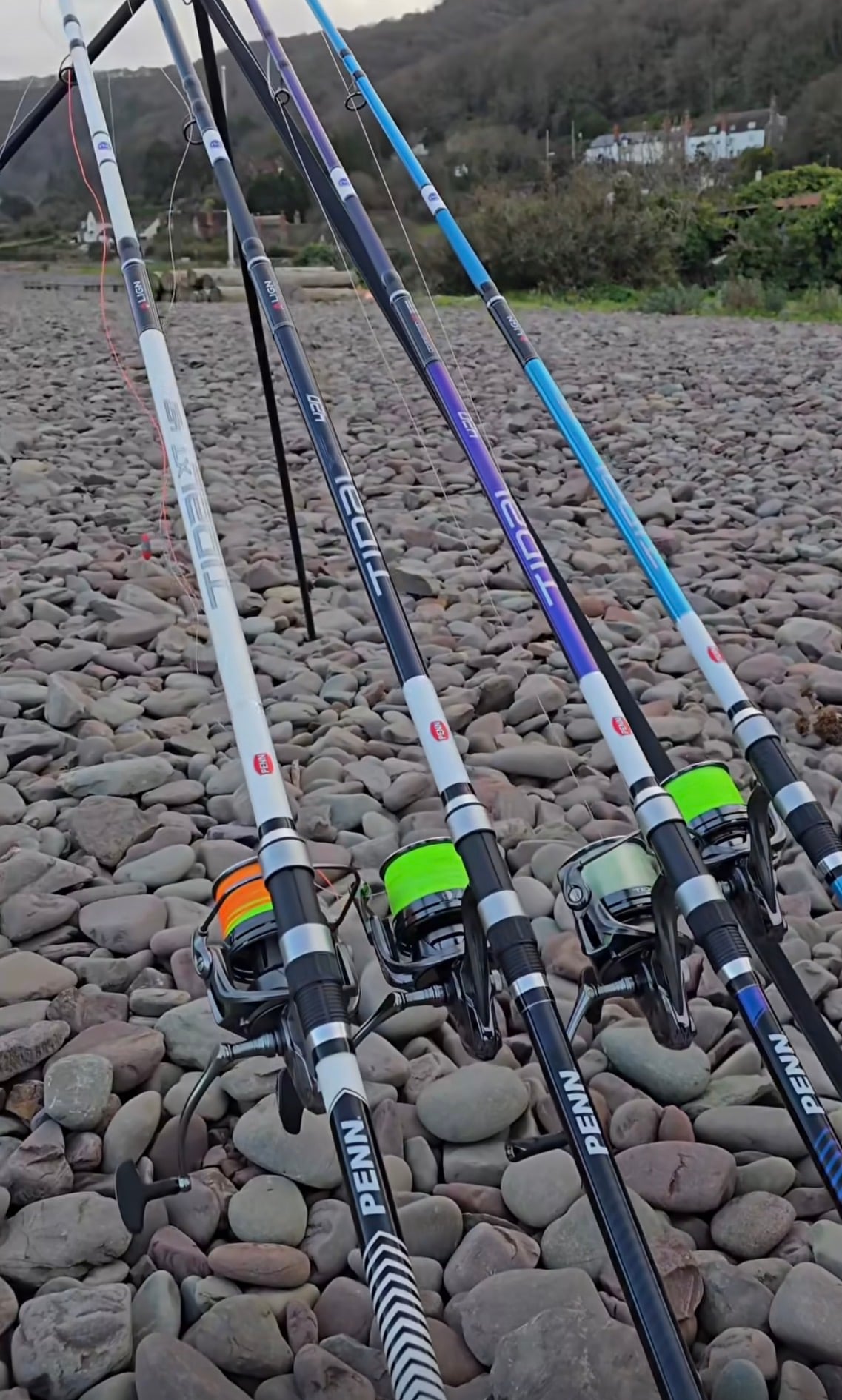
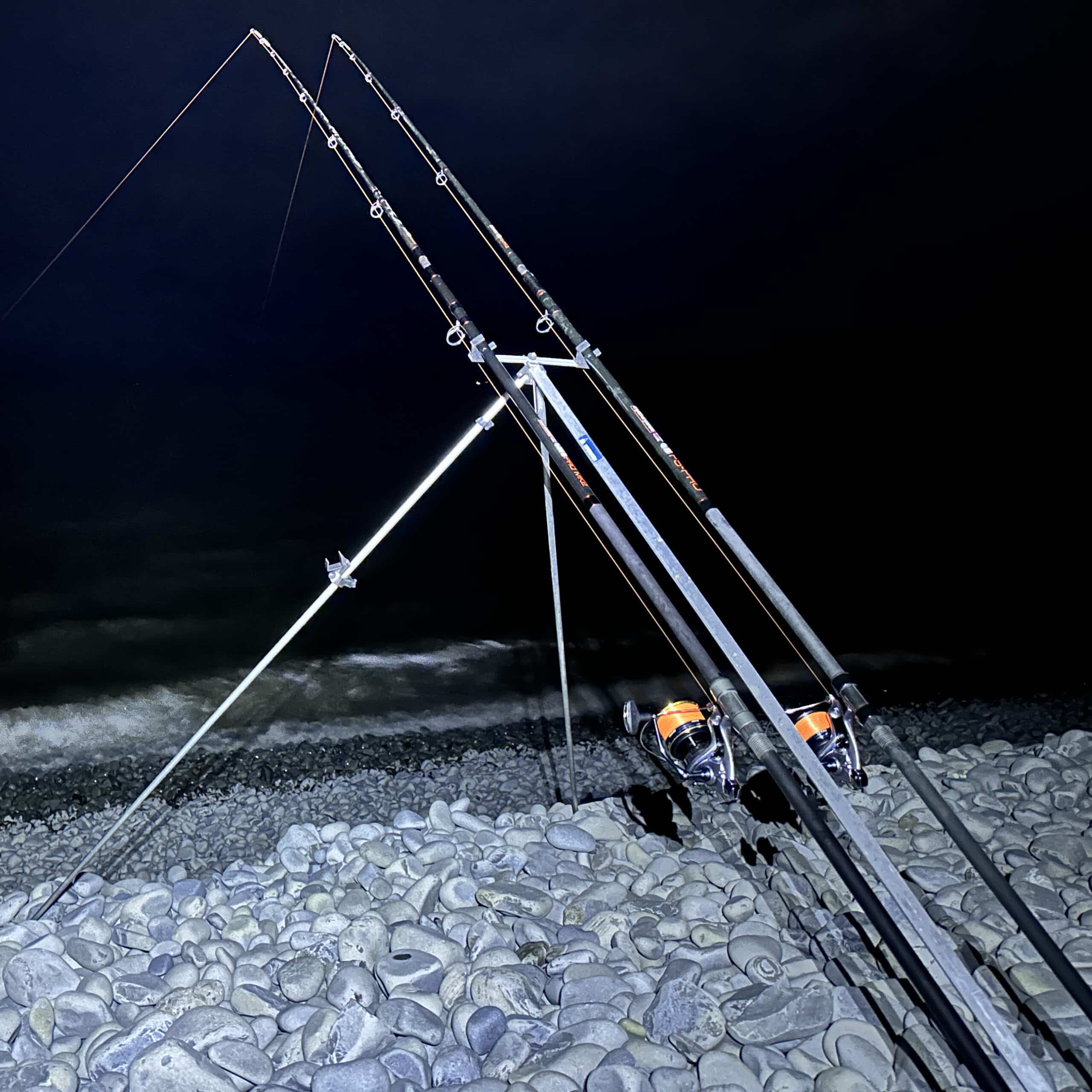
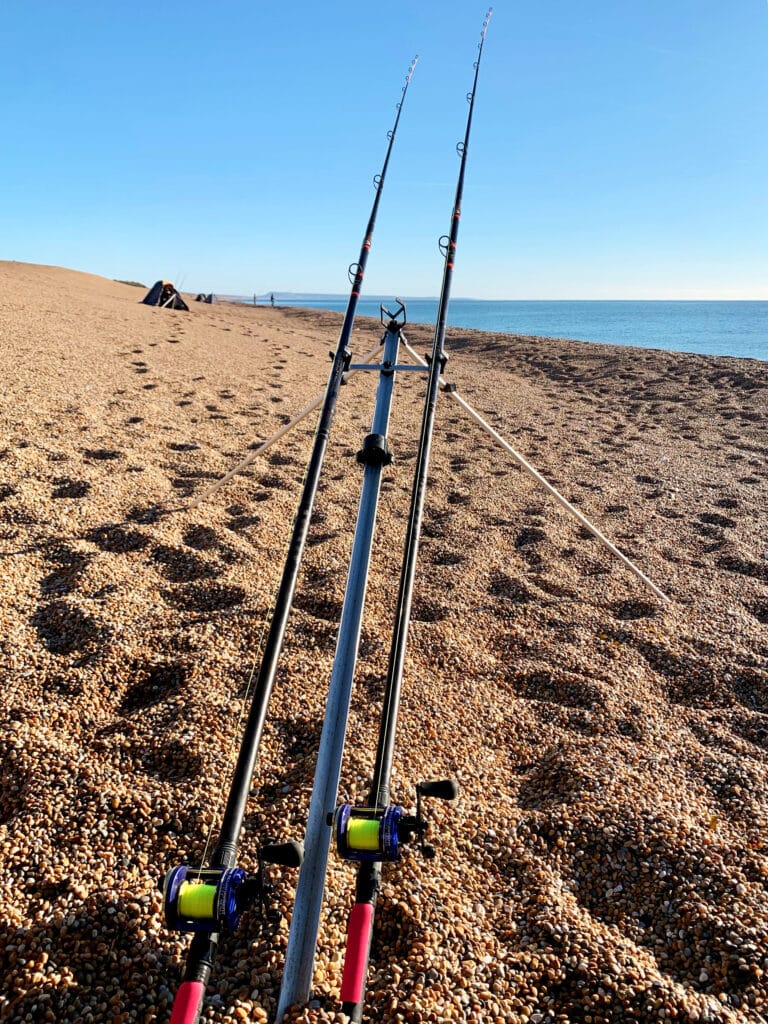
So you’ve arrived, you’ve done your research, picked up your bait on route and you’re good to go. First things first, take your tripod and set it up so that it’s stable. Remove your rods from their bags and assemble them, making sure that the eyes are in alignment. Next, attach your reels firmly to the rods and thread the line up through the guides making sure not to miss any. You should have a quick connection clip of some type tied to the end of your shockleader line that your rigs will then clip on to.
Ensure that your seat box is positioned in such a way that you are sat near to your tripod so that you’re able to view your rod tips without straining your neck. If the water is calm, you’ll be able to position your rods in the stand relatively low down. If the sea is rough and big waves are crashing in the edge, position your rods higher up in the tripod so that the lines are above the breaking waves. If this is the case, position your box further back so that you’re not staring up and straining. Have your bait supply to hand and get organised.
Etiquette
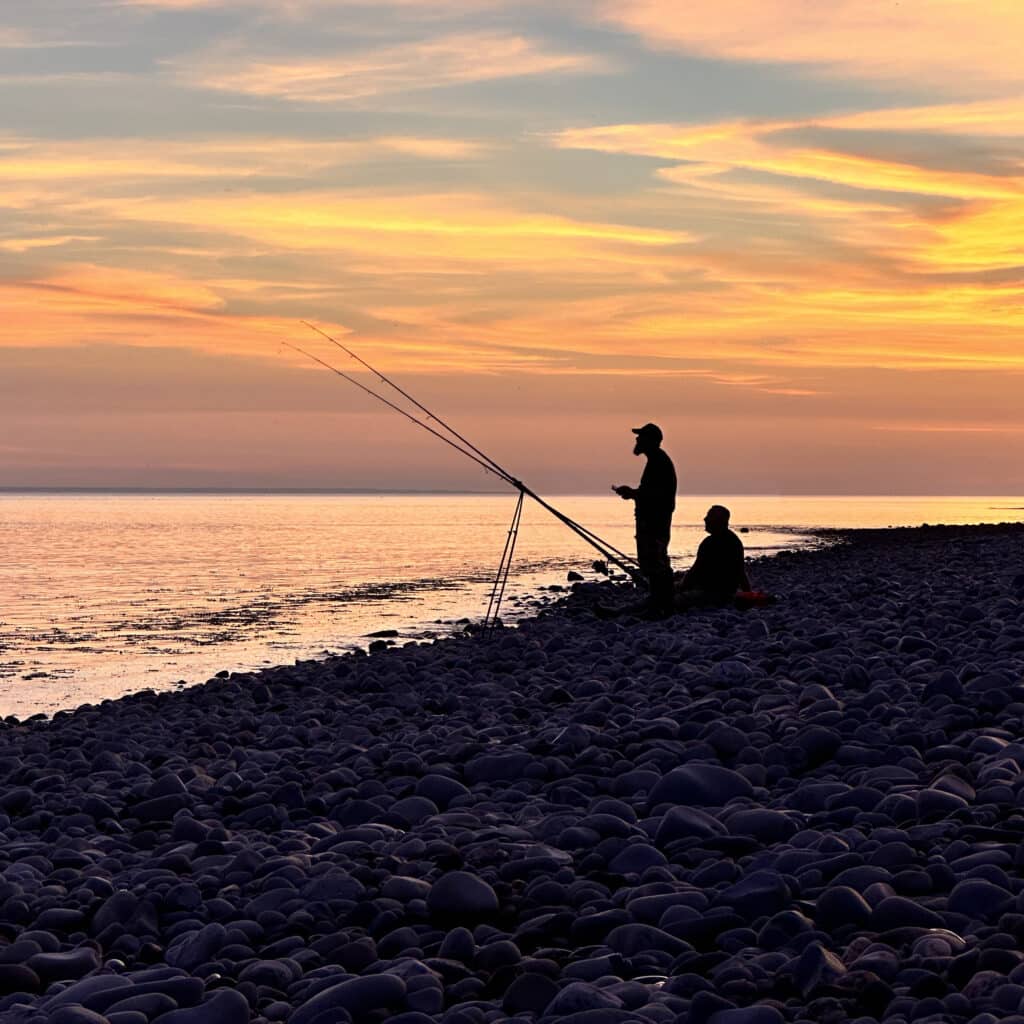
Chances are that you won’t be alone on your chosen venue, so give any anglers already in situ enough space to fish effectively. Fishing on top of another angler will impede their fishing and yours, so fish at least fifty meters away from your neighbour unless invited to fish closer. Be aware of members of the public, be polite and courteous. Keep bait and especially baited rigs hidden away from prying dogs.
Always take a carrier bag with you so that at the end of the session you can dispose of your bait wrappers and other litter responsibly.
Use your eyes and ears and observe what’s going on around you at all times. How far are other anglers casting? What are they catching? What baits are they using? These are all questions that will help you to build a better picture of your chosen venue and make future trips more productive.