



Blog
How To Catch Squid In The UK

Joining the VMO blog this week, Steve Perry offers his thought’s on the ever popular method that is jigging for squid…
A few years ago myself and a group of friends started targeting squid from the open shore and on piers. It started off as just a little bit of fun with a few cheap jigs fished under floats, a method we knew had been used for a long time by other anglers in the south west.
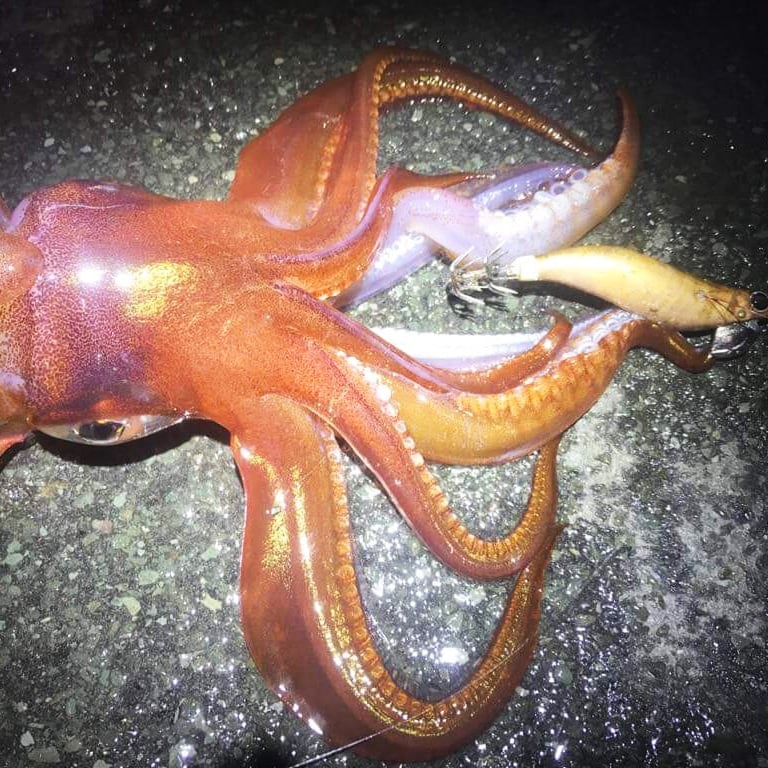
We fished not knowing much about seasons, tides, moon phases or weather conditions and had very limited success, although the squid we did manage to land always seemed to be massive, with a healthy number around 4 – 5lb in weight taken over a period of around four years.

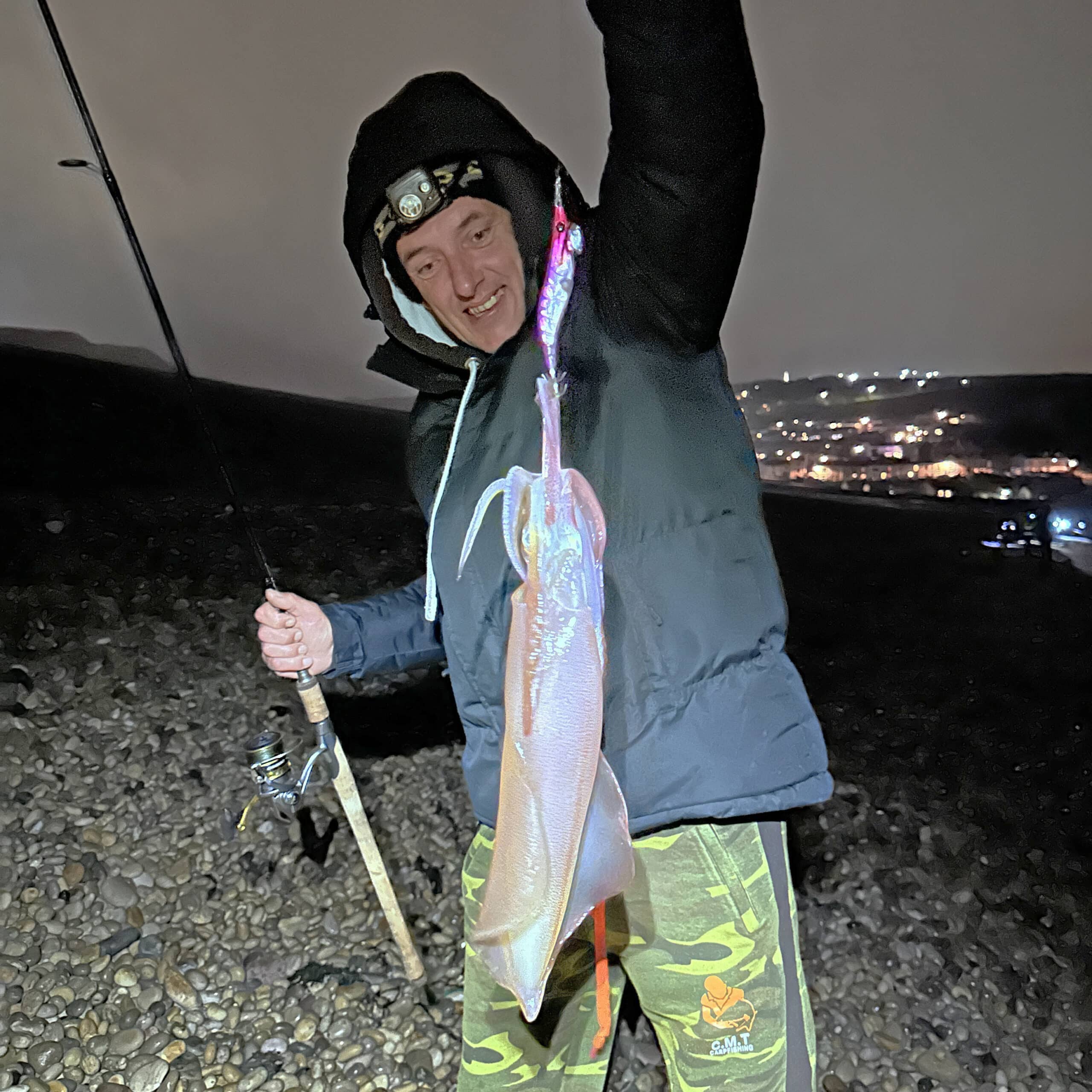
A large squid for author Steve Perry
As time went on, we started squidding earlier and earlier in the season in a bid to figure out the most productive times and tides to locate these amazing creatures which are lovely to eat, but more importantly the best bait you will find for targeting species such as conger, cod, bass, huss and several species of ray. I’ve even used them to target much larger species including my first ever shore caught common skate which fell to a large English squid that I had caught myself.

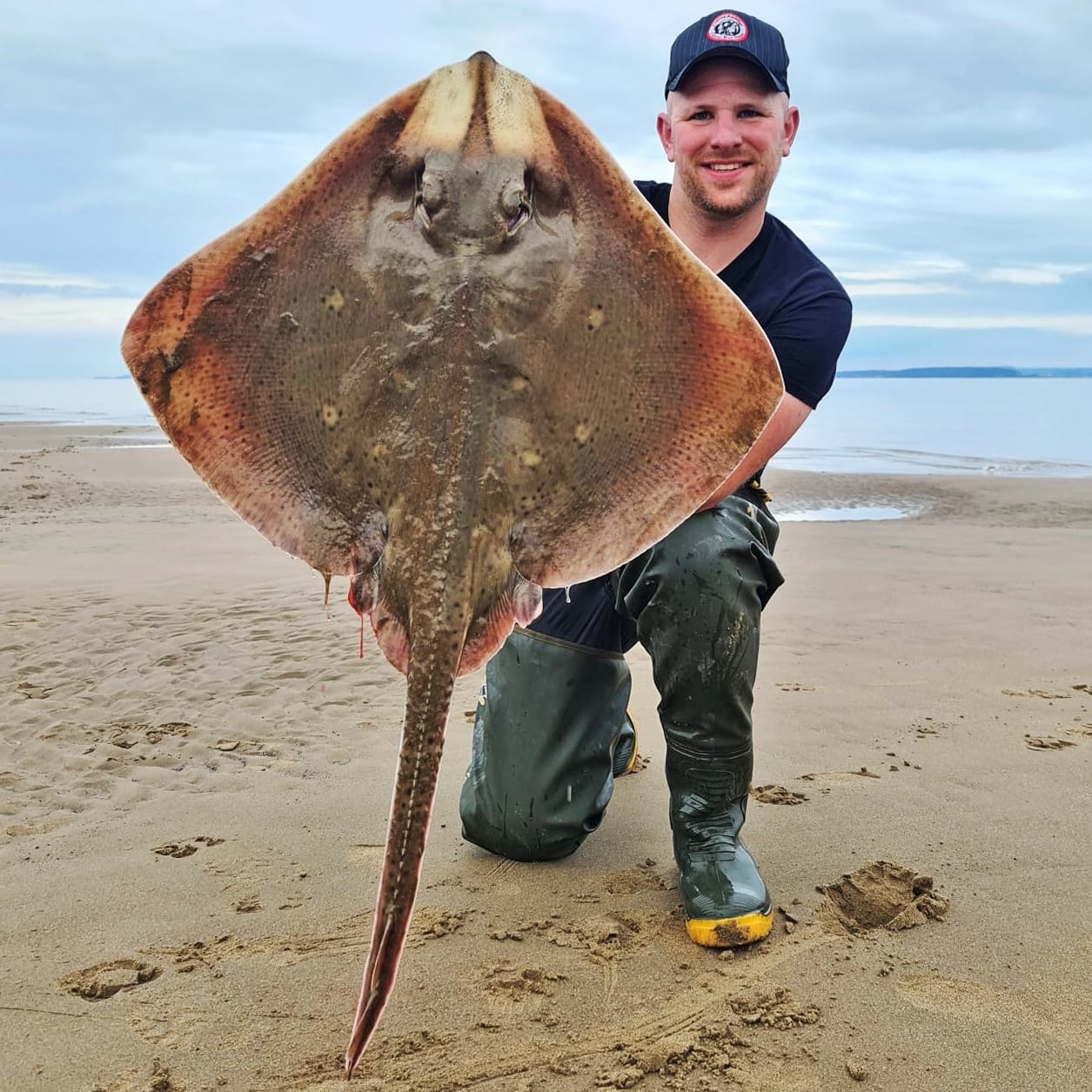
A massive common skate makes short work of a squid bait
Over the years we began to establish the best conditions needed to target squid in numbers.
A full moon and the associated spring tides during October, November and December appear to be most productive time with the high tide falling two or three hours after sunset producing the largest numbers of squid. When it comes to weather conditions, calm frosty nights and clear water are favourable when it is not unusual to land anywhere between 40 and 60 squid in a few hours. It would seem that squid numbers are definitely up on the south coast with the season now starting earlier and ending later so there is greater scope than ever to start jigging for squid in the UK. It is brilliant fun and only requires very basic tackle meaning it is perfect for introducing young anglers to the sport.
When it comes to squid jigs, there are so many on the market that our biggest dilemma was deciding exactly what to go for, and why. A little online investigation revealed that squid fishing is huge in Japan and one company in particular, Yamashita, appeared to dominate the world of squid jigs. At just under sixteen pound a piece, these jigs are considerably more expensive than the poorly finished versions we had experimented with until now, but none the less, we ordered some up with a view to putting them through their paces.
Squid Fishing Jigs
Once we had established the most productive fishing times, we were keen to focus our attentions on the jigs themselves and our online research pointed towards the fact that the Yamashita jigs were insulated, or as the manufacturer referred to this fabric coating, Warm Jacket. This increases the body temperature of the jig by a degree or so which makes them all the more appealing to the feeding squid.
My fishing buddy, Sam, was the first to have a cast with one of the new jigs and it did not take long to realise just how effective they are. By the end of this first session, I began to regret leaving my new jig at home as Sam went on to out fish me on a ratio of at least five to one! Over the next couple of seasons, we enjoyed some very productive sessions with bags of squid in excess of 40lb landed on the Yamashita Warm Jacket squid jigs. This range of squid jigs are undoubtedly the best squid fishing jigs we have used to date.

The Yamashita squid jig takes another squid
We began to note the following patterns over subsequent sessions-
Selecting a jig to suit conditions on the day can pay off and it is notable how some colours seem to work better than others, depending on water clarity. In calm, clear water, natural colours, blues and browns seem to be a real killer. If there is any colour in the water, pink and orange jigs can work wonders and if it is particularly dirty, a small glow stick attached a few inches above the jig can make all the difference.

A selection of Yamashita Warm Jacket squid jigs
The Method
Freelining the jig without any additional weight is undoubtedly the most simple and effective method we have used. Being able to spot your squid and casting to it is very productive so lights around piers and harbours should be used to your advantage. Not only will you see the squid easier but they will also be attracted to the lights.
If the squid are not visible, cast your lure out and work it back sink and draw fashion. By covering some ground, you will soon work out if the squid are present. Nine times out ten, the jig will be taken as it falls down through the water so be careful not to pull it way from the squid in the excitement. It is easily done! A regular lure or spinning rod and reel loaded with light braid is all you need, and a fluorocarbon leader of around 15lb should be connected to the lure itself.
Location
Weymouth harbour, Brighton and the Torbay area are all recognised as venues capable of producing some good squid fishing. But there is no reason why you shouldn’t give it a try anywhere along the south coast of the UK. The Channel Islands also offer some excellent prospects.
Conservation
Squid fishing is a great way to get some bait for the freezer or provide a tasty meal, but as with any form of fishing, always take only what you need and will use. Look after your catch in a cool box with some ice packs to keep it in tip-top condition.
As a foot note, squid fishing can be a messy business, so a large towel to remove ink and slime from your hands is something you wont want to be without.

A nice catch of squid that will be put to good use after freezing down. Only take what you need!
Related Posts
The Ultimate Guide to Penn Tidal Beach Fishing Rods

Century Eliminator X Series- Fantastic First impressions!

Smoothhound Fishing Aboard the Aly Kat – Veals Mail Order Hits the Bristol Channel
The Ultimate Guide To Beach Shelters
squid fishing UK- A Beginners guide
It’s Blonde Ray Fishing Time!
Easy Bristol Channel fishing spot!
Chesil In The summer- Small Baits Rule!

Fenix HP35R- A New Contender For Best Headlamp?
Wrasse Fishing- Simple And Fun!
FISHING IN The New Clear Bristol Channel
The Dongle- Where are we at?
4 thoughts on “How To Catch Squid In The UK”
Comments are closed.

Boscombe pier is the place to go.
What rod do you recommend for shore jigging for squid?
The Shakespeare Ugly Stix GX2 Spin 9′ 15 – 60g is excellent. The soft tip is great for working the jig but there is enough backbone in the blank to haul a squid up the wall, with caution, if need be.
Hi, has anyone tried any squid fishing in the west i.e Minehead harbour wall etc, or is the waters not clear enough. Would like to take my boys but can’t find any info on areas etc in the west for fishing for squid