



Blog
Fishing for bullhuss

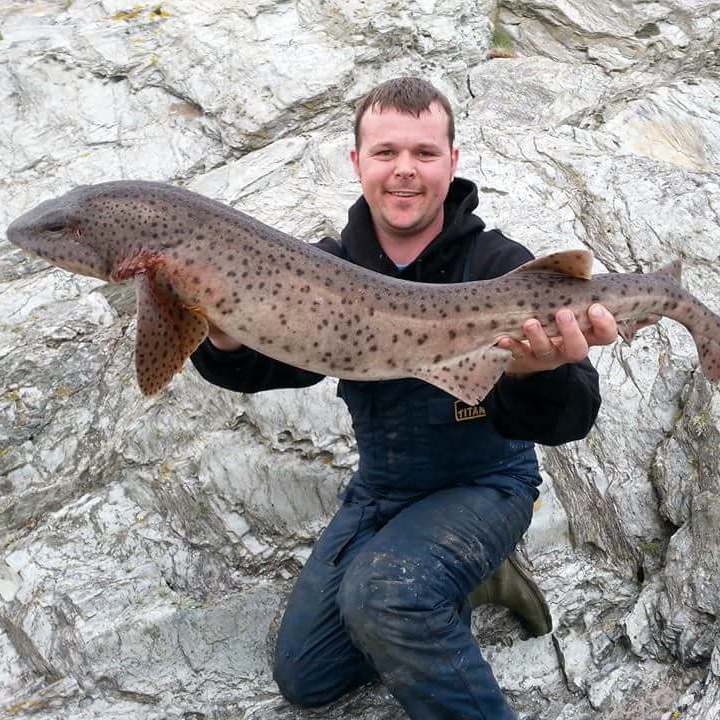
This week, south Devon angler Gary Mitchell explains how he approaches bull huss fishing. Gary has landed some fantastic specimens so this is really worth a read…
Love them or hate them, huss have always been a popular target for a lot of sea anglers. These feisty fish are mean looking bruisers that can provide great sport all year round and depending on venues, can differ in appearance from anything from jet black through to beautiful light leopard type markings. When the weather is poor and the tides aren’t quite right, there’s often a mark capable of producing fish that will suit the tide and weather conditions.
Huss can be found on many venues around the southwest of England and along much of the Welsh coastline. Typically, the best way to locate spots that produce huss is to look for mixed to rough ground that offers a good depth of water and tidal flow. However, in areas where they are more prolific, shallow cleaner marks can produce just as well, particularly after some rough weather that has coloured the sea up. Some deep water river mouths such as the entrance to the river Dart can also be very productive.

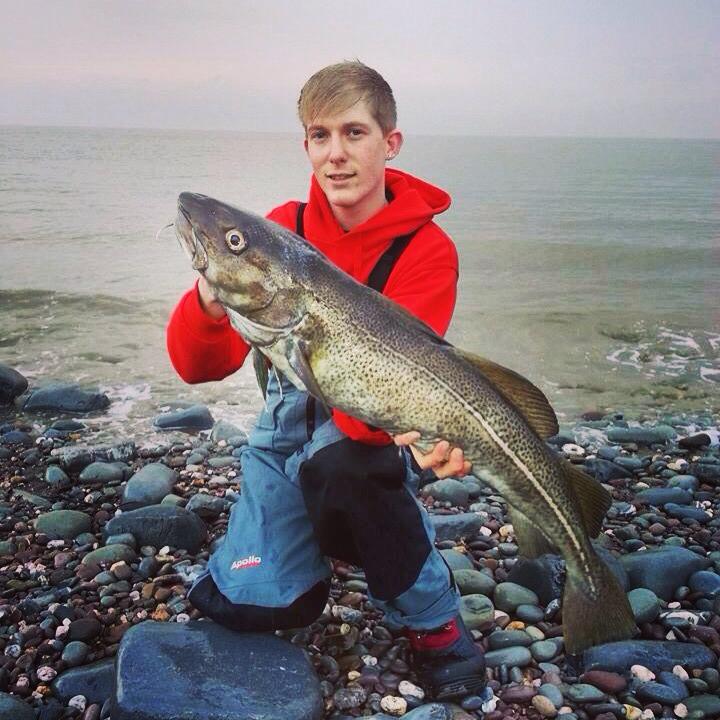
Gary Mitchell with one of many large huss he has landed
Fishing times
One of the best things about huss is they can be a viable target all year round, day or night. March through to June can be a very productive time for big fish as a lot of breeding females tend to be inshore laying purses (their young ) and again autumn into winter is a good time for numbers of fish. Night fishing tends to be the most productive time to target huss but fishing through the hours of daylight can be a good way to target big specimens as most of the better fish I have caught have been in daylight when there are generally less pest fish such as dogfish and pout to intercept your bait.
Getting geared up
A fairly heavy rod is needed as quite often the areas that huss inhabit are rough ground marks and you need something with a bit of poke to get your fish and end tackle out of the bottom.
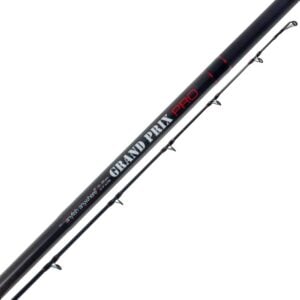
Anyfish Anywhere Grand Prix Pro, an extremely powerful rod for rough ground fishing
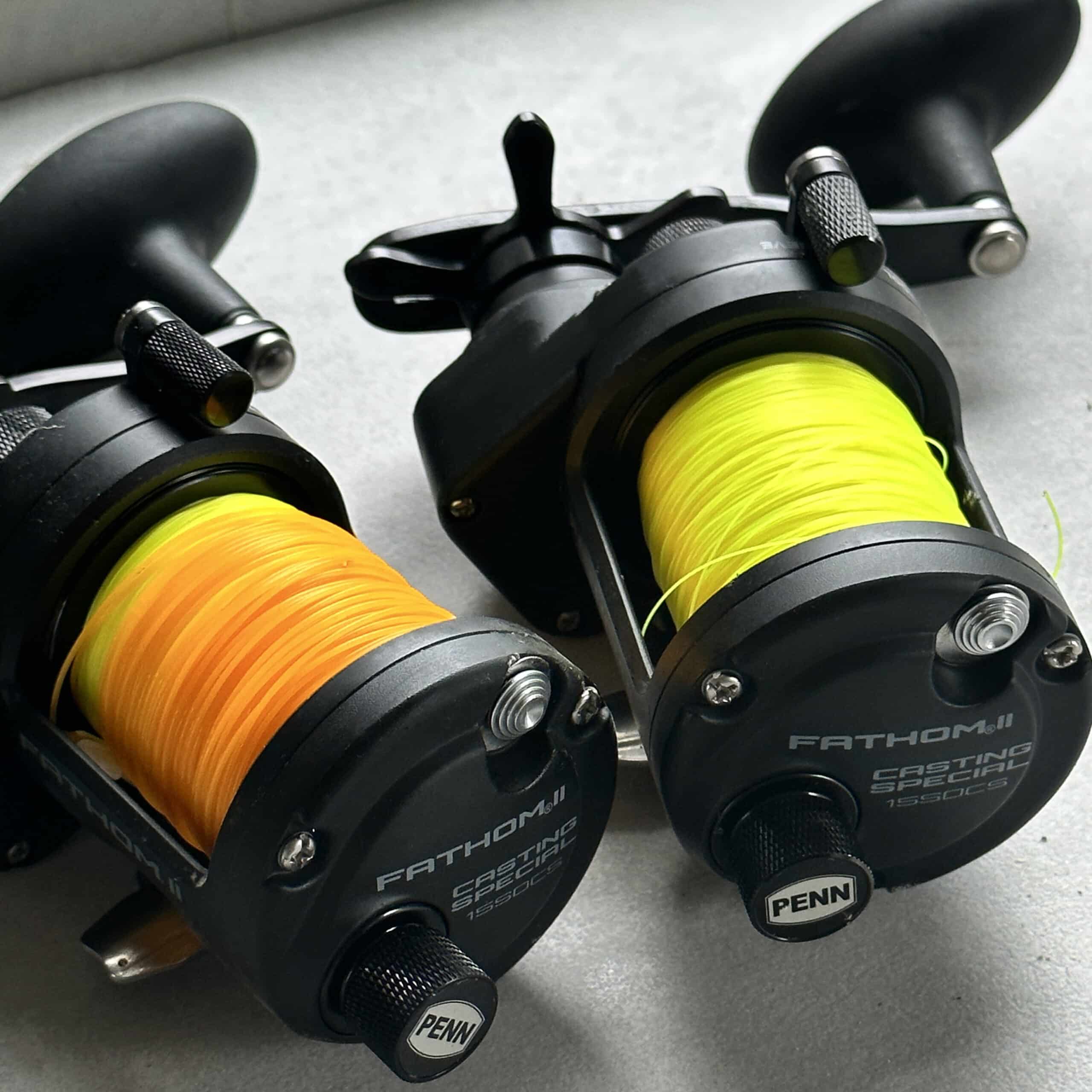
My choice of reel is a Daiwa SLOSH 30 reel loaded with a 30lb mainline. This may seem extreme but your line can take a real beating over this kind of terrain and you need the diameter to combat this.

Gary’s choice of reel- Daiwa SL30SH
Rig wise, it really does pay to keep it simple in order to avoid getting hung up. I use a short pulley rig constructed with 150lb monofilament and tied to a pair of 8/0 Varivas Big Mouth Xtra hooks. These wide gape hooks are perfect for presenting a large fish bait.
A rotten bottom is essential and I favour an upside down Gemini Rig Clip to hold the lead which is connected with a short length of 25lb mono. If the ground is particularly nasty, I will simplify things further by using a good quality three way swivel to construct a basic paternoster rig.
Bait
Huss are not known as fussy eaters and will hoover up almost anything put before them. I have found refrozen baits to work particularly well. My favourite huss bait would have to be half a mackerel as these bigger baits are more difficult for the nuisance fish to get in their mouths. Other baits that can work well include squid, cuttlefish and in some regions, rockling.

A beautifully presented mackerel bait
Bites and landing
Bites from huss can vary from very aggressive takes to cautious rattles, but you should always set your ratchet just incase a large fish attempts to make off.
When waiting to strike, choose your moment and be sure to set the hooks hard. Huss have very bony mouths and are known for spitting baits out at the last minute as the result of a poor hook up. I like to strike twice in an effort to really get the hooks in there. There is nothing more frustrating than seeing a good fish float away just inches from the waiting net after it sheds the hooks. Landing huss with a net is my preferred method, but always be conscious of how close you are to the water and be aware of the sea conditions. Never be tempted to get too close and put yourself in danger- it just isn’t worth it.
Once your huss is in the net, some positive handling is necessary to avoid the rasp of the fishes rough skin that can do some nasty damage. Pick the fish up with both hands and avoid lifting it by the tail so as not to damage it. Use a T-Bar to remove the hooks as again, the teeth are extremely sharp and could make a real mess of your fingers.
Bull huss are very hardy out of the water, but all the same they should be handled with consideration for their well-being. Use a sling to weigh the fish, take a couple of pictures and pop her back as quickly as possible. There is nothing nicer than seeing a huss swimming back down in to the kelp!

Another stunning fish for Gary
Related Posts
Wrasse Fishing- Simple And Fun!

Bristol Channel Bass Fishing- Now’s The Time!
Choosing The Best Multiplier Reel For Your Shore Fishing
Shock leader – Is It Needed And What Should I Use?
Sea Fishing Lines – What Should We Use For Beach Casting?
Bait Clips – Everything You Need To Know
Tackle Maintenance – Everything You Need To Know
Rig Making – Everything You Need To Know
Sea Fishing Bait – Popular Choices Explained
Vass Dry Fishing Rucksack Edition 3- First Impressions. By Jansen teakle.
Starting fishing? the best season is here! By jansen teakle
Bristol Channel reef fishing – a beginners guide

6 thoughts on “Fishing for bullhuss”
Comments are closed.

Just how big are your fish as you are frusting them up at the camera. Still there are times when small whiting work better if the mackerel are late arriving into inshore waters.
Hi Tim, the fish pictured are all double figures in weight. Although thrusting the fish out to the camera may not give a true representation of size, it does make for an impressive picture which is surely what we want to see at the end of the day? Tight lines
Would you use luminous beads as an attraction like a plaice rig
Luminous attractors such as tubing or beads are definitely proven to work well in some regions.
Great blog, thank you.
I just had a question about sea conditions. I have found an area which I will be fishing a lot over the next few weeks for huss. what would you say is good conditions for fishing for bull huss, as the area I am fishing is very shallow (3-4ft at low water) and when I did fish in this spot the other day the conditions were pretty bad – big swell, massive waves and lots of white water, I blanked. Would you recommend fishing calm nights, or relatively big waves for huss?
I’m new to sea fishing.
many thanks
Hi and thanks for the compliments on our blog. I think the first thing you need to find out is whether or not huss are regularly caught from the spot you intend to fish from?
It does sound a bit shallow there, but it could still be possible to target huss if they are resident. A stirred up sea usually offers the best chance so once you have established that huss can be caught there, it could just be a case of putting the hours in. Good luck!